Search

Category Archives: Surroundings

Bibbona

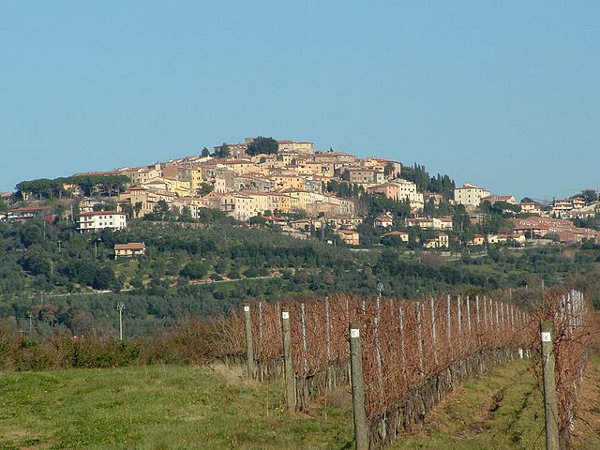
It is said that Bibbona was one of the strongest castles in the Maremma, surrounded by turreted walls and defended by a deep ditch. Still obvious is its size of inhabited fortress, built on a low hill.

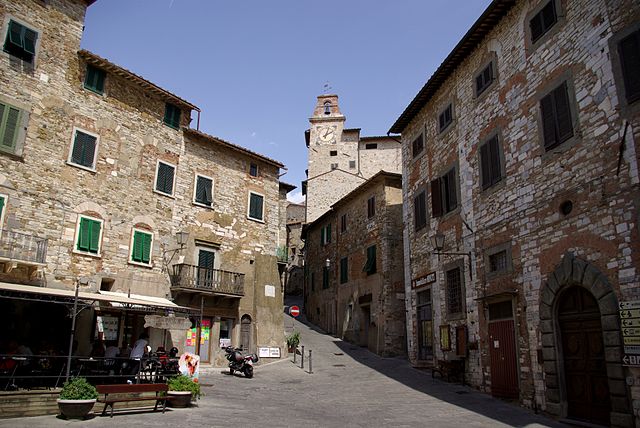
So it appears entering the maze of narrow medieval layout and building types in which they emerge from different eras and the church of San Ilario eleventh century.

Also evident links with the agriculture of a castle in which, according to a statute of 1400, the head of the family were expected to plant an olive tree every year at least and two fruit trees and also to make the garden.

Just outside the entrance to the castle one of the glories of Bibbona: the beautiful Renaissance church Santa Maria della Pieta, built at the end of the 400 project of Vittorio Ghiberti, Lorenzo's son.

Church of St. Hilary

On the front there is a door architrave finished at the top. Next to the entrance there is a memorial plaque. On the sides are mullioned windows and faux wood. The bell tower stands leaning against the right side. The Church is bordered on the left and right with Via Roma Via Vittorio Veneto.

Palace Gardini

The façade is finished with plaster, and two rows of windows framed in a frame of smooth stone, the same that surrounds the door and on which there is the coat of arms with a tower in the field.

Comune Vecchio

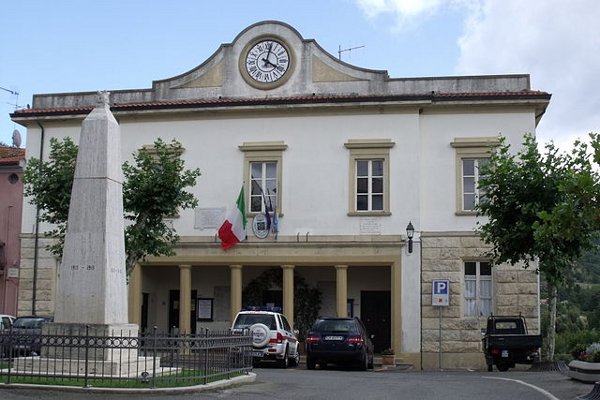
The building has been the seat of legal and later played the role of common

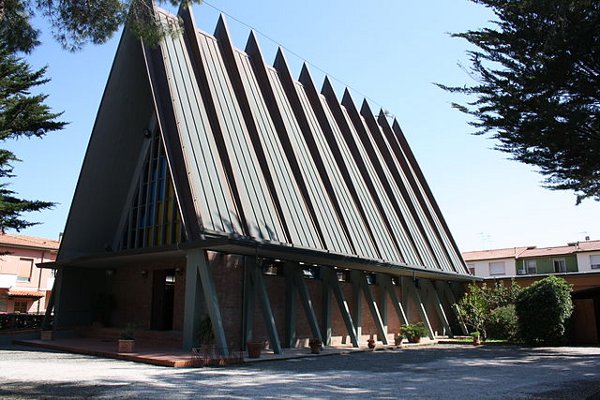
Church St. Joseph

On the facade of this church opens the portal of entry above which there is a plate with a coat of arms and a small rose window, and on the side there are traces of openings now walled up.

Oratory of S. Niccolò

The entrance gate to the seeds side pillars and the window above does not presentente in other churches of the place.

Church of Santa Maria della Pietà

The articulation of architectural and decorative is shown by the main facade, which is characterized by the presence of a simple rose window. Then this Church has a small bell tower.


PERIOD ETRUSCO

The first Etruscan Villanovan settlements that developed in Tuscany between the X and IIX sec. BC have been brought to light in part on the territory of Bibbona.

Many finds from the tombs are above the Etruscans in fact being very religious and gave importance to the death to the passage of the afterlife.

To this made the graves of their real homes, taking our place all the objects belonging to the deceased which could be useful in later life. Due to the richness of the finds, we can say that in the sixth seventh century. the Etruscans came into contact with Greek civilization. Proof of this are the graves of warrior princes dating from the Orientalizing period. The monks and precious objects found in the tombs testify to the skill of the Etruscans in the processing of various metals including gold. In the area, the activities involving gold and steel industry developed in Populonia, where the necropolis was active until the first century. BC when the whole territory was conquered by the Romans.

On the rock of reddish tuff, shelly, very compact, Tertiary origin, was born Bibbona, located at 80 m. above sea level, south of the river Cecina, 7 km from the coast. The name itself suggests, after several transformations, its Etruscan origin: VIPI, VIVIPI, VIPINA, VIPUNA, Vibona, BIBONA.

The birth of this small village probably dates back to the eighth century. BC (Etruscan Villanovan period), as well as those of Montescudaio and Casale, consisting of huts, whose inhabitants lived hunting, cultivating and nurturing, as evidenced by the discovery of a large quantity of tools and small bronzes found in a votive deposit.

Meanwhile in the area, the village of Velhatri (Volterra) became more and more important due to the development of agricultural activities-craft and trade, with whom arrived from the coast Eastern influences (Greek).

From the eighth to the sixth century. BC, about the archaeological finds such as jewelry, luxury items for banquets, weapons, bronze axes, belonged to the so-called "Principles warriors", it is called oriental period, as in the area worked to order some Greek artists, which were then imitated by the locals.

With the development of Volterra, there was also the birth of aristocratic families who had control of the territory as they moved into the villages and some members became "Heads-village" or "Principles warriors", as they began to control both the economy that the defensive organization.

The Principles were distinguished by the people because they had the possession of weapons and death were buried in monumental tombs, accompanied by precious objects and finely crafted to the oriental manner.

All the exhibits are visible today in the Archaeological Museum of Florence, as well as one of the most beautiful pieces of bronze sculpture, the "goat of Bibbona" ​​perhaps the handle (handle) of a vessel dating from the fifth century. BC

We do not know with certainty the exact location where it was found, probably comes from one of the tholos tombs (in underground) found in the vicinity of the farm "La Ghinchia" (on the Via Aurelia between California and Cecina).

These tombs are contemporary to those "tholos" found in Casale and Casaglia dating back to the fifth century. BC

The tomb of Casale was moved and rebuilt in the Archaeological Museum of Florence, while that of Casaglia, in the garden of the Technical Office of Cecina. Some exhibits, such as urns, still containing the ashes of the deceased, are preserved in the museum Guarnacci of Volterra.

Still in Bibbona, on the "Way of the millstones," (so called because in the past there was a mill) in the vicinity of the historic center, was found, although badly preserved, a rock tomb.

The structure of this particular type of tomb is much better seen and appreciated in the necropolis of Norchia (Tarquinia) and Sovana (Grosseto).

Other tombs, this time "a subterranean chamber", carved into the rock can still be seen in Via of the millstones and the long one that leads from Bibbona in Casale, today these are simply the caves, called "niches", poorly preserved and partly destroyed, when the road was widened, so the twelve found, if it can recognize only four.

This type of tomb, much better preserved, is visible in the woods of Buche delle Fate, in Populonia.

In the area between Bibbona and Casale were found fragments of ceramic vases painted black (oinochai - olpai), and a bronze depicting a Gorgon's head, dating from the fourth and second century. BC, in fact, at that time there was the Etruscan town of Casalvecchio and the underlying necropolis of Casanocera, from which the numerous remains of the tombs of the Princes warriors, so called because the wealth of furniture funeral made me think of noble tombs.

Among the most beautiful and best preserved there is a helmet and a bronze ax (bronze for the Etruscans had the ax symbol of wealth and power), these were undoubtedly funeral ornaments are unfit for combat, also l ' ax was enriched with stylized ducks stuck in the wooden handle (ornamental elements orientalizing).

Were also found other objects such as a necklace in ivory (VIII century BC.) With a pendant depicting a monkey eating a coconut, with a water bottle pendants bronze fibula in the shape of a horse found in a woman's grave ( VII century BC.).

The area of ​​Montescudaio is the vessel urn (or urn) of the seventh century. BC found in a tomb in the cockpit, in the past the base had been restored in an improper manner that was later removed, whereas the lid, bowl-shaped inverted, it is quite well preserved and reproduces the scene of a funeral feast: sitting on a throne (the back is destroyed) is shown the dead in front of a table with three legs (paws of a lion), can be recognized on the table loaves of bread and cheese, on the other side of the table there is a woman standing (the lowest of the deceased, however, to show his allegiance) with arms up to hold a fan or bless the table.

The woman has her hair in a braid (braid hairstyle could also be masculine but only for the nobles), next to the table there is a big pot "crater" where it was mixed wine and water according to the use greek, on the other side of the table you can see the base of another crater, destroyed.

The dead man is sitting at the table, according to the most ancient Etruscan tradition, in fact, in the seventh century. BC had not yet been assimilated the Greek custom of eating lying on a sofa "triclinic" as will happen later, habit also demonstrated by the urns found.

The vessel has only one handle, decorated with a seated figure with hands on his knees (gesture of sadness), this figure sore could be a relative or the dead man himself.

In the fifth century. BC in the territory, on the hills that separate the valley of the Cecina from the Era, the village of Volterra, became a major city-state where you went saying many aristocratic families, but this involved depopulation, the loss of importance and autonomy the other villages of the Val di Cecina as Casale, Casaglia and Bibbona.

In the fourth and until the second century. BC there was a revival of rural settlements, followed by a new demographic crisis but which we do not know with certainty the cause, you'll probably concurred the widening of the swampy and malarial the surrounding plains.

ROMAN PERIOD

Also in the area of ​​Val di Cecina, were found the remains of the next "Roman period", fragments of pottery are both smooth and decorated in relief, buckles hinged funds cups dating to the 1st century. A.D. sign of the existence of human settlements especially in the rustic villas built in the area along the river Cecina.

These were real farms where slaves worked for the production of grapes, olives, fruit trees and crops that were plentiful were not only used for immediate consumption, but also for trade in basic commodities for the rich economy of the Empire Roman.

Towards the end of the third sec.d.C. however, began a slow abandonment of the villas that continued throughout the fourth and fifth centuries AD up to almost total depopulation of the area.

Also in the area are also numerous Roman tombs were found such as "Capuchin", the oldest is that of Belora Low (Riparbella) of the first century. A.D. where it was found a lamp and four balsam glass, in other urns were found in tuff and alabaster. Always the first and second century AD is the necropolis in the locality FIELD TO THE PEBBLES in the municipality of Cecina, these dating to the 1st and 2nd century. A.D.

They were found also in the stretch of sea off the mouth of the Cecina, considered the port of Volterra, and along the coast of Vada, of underwater finds that testify to the existence of port calls or staging points on the Tyrrhenian routes; important finding is was a wreck cargo of amphorae, a millstone and two anchor stocks in the lead.

On the coast there were also the salt mines and brick factories, so the whole area, full of opportunities, attracted many inhabitants who settled from the coast to the locations of the inner and Linaglia Paratino, and the whole area was a knot of intense commercial traffic.

A large number of exhibits, set to increase from excavations of the Roman Villa of San Vincenzino identified as that of ALBINO Caecina, located 2 km from the coast on a small hill to the left of the river.

The Caecina were a prominent family, descended from the noble Etruscan Volterra, the KAIKNAS-CAETNA-CAEICNA - Caecina that with the advent of the Romans latinized their names in Caecina. A member of this family has left us a translation of an Etruscan text of magic, thus giving us a chance to understand it.

The findings from the villa testify that this had a long period of activity: a coin (axis) of Octavian, dates back to 40 BC, fragments of cups are of the first century. a. C., other ceramics are of the second century. AD, ceramics and African cooking reaching the fifth century. A.D.

The excavations that began in 1850 brought to light wall and floor coverings in marble, white and colored, also a mosaic with geometric shapes, capitals and bases of columns, parts of rooms and various busts.

The plan of the villa is typical Roman: a large atrium on the facade towards the hills, a thermal plant on the left side (south-west), the back rooms of the servants, warehouses, depots and oil. The baths were excavated only some circles as the halls of CALIDARIUM, with the adjoining semi-circular pool, behind the environments with boilers "KITCHEN" and here were found and coal stoves, another excavation to the east, perhaps the concerns thepidarium with a rectangular swimming pool which is accessed via two steps, on one side halls opened the gym.

Near the villa and probably connected to it for the supply of water, there is a large underground water system comprising a cistern, tunnels and collection channels that run for another 200 m.

In the part of the villa used as a warehouse, it has emerged from the excavations also a early Christian cemetery dating from the fifth century AD In fact the villa as all the others in the area, after depopulation, after the fall of the rich economic system based on Roman rural villas, finally collapsed with the fall of the Roman Empire (472 AD) and the population moved to the cities.

The few remaining residents took advantage of the building material of the villa until exhausted, after the area became a cemetery.

Until now, over 120 burials have been found, but there should be many more, in fact this SAN vincenzino is considered the largest early Christian cemetery in all of Tuscany.

The burials are found all graves, arranged in east-west direction, very simple, where the dead was laid bare or wrapped in a towel, without any ornament, so it was quite complex back to the period of burial, however, we know that the most recent grave dating back to the Middle Ages (eighth century AD)

For the basic ground, many burials are well preserved and have been extremely useful for an anthropological study of the ancient inhabitants, in fact we know from the skeletons found that the average time was around 27-30 years, the deaths were from violent causes but due to illness but excluding malaria, as it would be led to believe, the power was good, rich in cereals, fruits, olive oil and wine, and with the first infiltration barbarian, after the fall of the Roman Empire, was enriched greatly meat and especially the pork, this animal who found a favorable environment and diet abundant in fruits of oaks and holm oaks surrounding the spots.


MEDIEVAL PERIOD

In the territory of Bibbona, until the fifth century. the population was poor and displaced in villages scattered on the hills, but some village was built in the plain, near the churches and the main roads (the Via Aurelia, the Via Emilia, and Volterrana).

Some castles were built then on the pre-existing villages Latin, while others function as principals were born in high places to guard both of the pirates from the coast, that the barbarians allocated in the interior, to remember between these castles Riparbella, Montescudaio, Guardistallo, and Bibbona Bolgheri.

Against Turkish pirates and Saracens were built along the coast several watchtowers and defense of these today, though with many renovations, it remains the so-called STRONG BIBBONA.

At the end of the eighth century. the Arimanni (smallholders Lombards with the obligation of military service learning) strengthened these castles and inglobarono property in the woods, the meadows, the neighboring lands, thus giving rise feudal organization typical of the entire period.

Bibbona during the High Middle Ages (700), we have only scarce and fragmentary information about a small town, near via Aurelia, named ASILACTUM from "asylum actae" that asylum on the coast, in fact there was a hospital ("asylum "), which was a place of rest and refuge for pilgrims along the area.

According to other sources, the settlement was called "AD SALATICUM" being near the sea and salt marshes.

To locate Bibbona as a castle and have the first news we have to get up to 1100 in the morphology of the country, even at first glance, it immediately gives the image of a medieval village enclosed in ancient city walls, for irregular that supports the contours of the land, this unfortunately today there are only a few traits as the bastion emiciclico and a tower.

Beyond the walls there were and are of the ditches, the "Botro Madonna" and the "Botrello of Bacchus", intended for the collection and flow of water.

From a document of 1872, the history of Bibbona, edited by Canon Righi, we know that in the eighth century. the village under the despotic rule of the Arimanni had to endure numerous abuses and in this respect is still remembered the LEGEND OF Agilulfo, lord of the place, who lived with his soldiers in the Torre della Mirandola, (now this is the only remaining blocks of shelly tuff) located not far from the village in the direction of the Macchia Magona and 2 km from the current farm "Le Badie," whose house stands on the ruins of the old monastery of 700, remembered by the name of ABBEY OF ST MARY'S MANSIO (mansio = farm) or even ABBEY DE 'MAGI.

Our whole area during the High Middle Ages, was the site of monasteries and churches (Latin for "plebs" = people, asked for the people) of which remain scarce remains in place and Camposassino Pievaccia.

Other churches and hospices for pilgrims on their way to Linaglia arose, Paratino, Montalpruno and all were part of a journey of faith, run parallel to the better known FRANCIGENA or Romea, who came from France to Rome and went to the Holy Land,

is on this path also the church and hospice S. JOHANNIS DE BIBONA.

Around 1000 Bibbona and the surrounding area were owned by the Bishop of Lucca which were then granted on lease accounts Tedice and Ugo Della Gherardesca family that already had control of the area.

In 1100 they built the counts in the highest part of the village, the castle and in 1175 the church of St. Hilary.

Along the walls there were three towers, of which today we can see in Victory Square, the only one left, known as "The Rock," this in tuff, was initially the main tower "Mastio", the fortified residence of the accounts in the event of war, then in 1400 became a watchtower and today, much lower than originally because the floor collapsed in the earthquake of 1846, is used for residential purposes.

Along the wall there were also originally of doors: one called "Gate of the Sun" (destroyed in 1785) was the beginning of Via delle Mura, in the left corner of the square of the church of St. Hilary, near present-day " Clock Tower ", another called" Porta a Kiss ", also disappeared not even know the probable location.

In early 1200 the castle passed Bibbona, as a free city under the rule of the Republic of Pisa and according to a parchment preserved in the town of Volterra, the Bishop of the Diocese leased to the inhabitants of the village, 67 houses, also farms, forests, pastures, vineyards and orchards were assigned to 124 families for a total rental of 6 pounds, 9 and 11 money money.

According to the Statutes of the time Pisa, Bibbona already in 1284, was the seat of the Captain of Justice and the Notary and throughout 1300 was undoubtedly the most important castle in the area, as evidenced by the many churches, monasteries and churches that belonged: Saint Andrew, Saint Blaise, San Cerbone, St. Christopher, St. Philip and St. James, St. Mary and St. Hilary of Mansi.

Since 1345 Bibbona was head of the castles of the area in the revolt against the Republic of Pisa, but to no avail and in 1397 the territory was still under the rule of Pisa.

When in 1406, Florence subdued Pisa, Bibbona and the family of the Counts of Gherardesca voluntarily went to the Republic of Florence so that was allowed them to retain the seat of the Captain of Justice and the Notary.

The Florentine rule continued until 1494, when following the descent of the French led by Carlo 8th, Pisa took back the castle, but in fact nearly two years later, in 1496 Florence was again the dominance of Bibbona which was chosen as headquarters of the garrison and fortress to thwart the rescue besieged in Pisa.

As evidence of 'autonomy which could have Bibbona, we can still read the first statutes dating back to 1407 which remained in force and regulate the lives of the population until 1700.

However, in those years (late 1300 to 1400) the area because of ongoing wars between Pisa and Florence, the threat of pirates and the spread of malaria, was much in decline and the countryside, the churches and monasteries were abandoned by the population who preferred to move around inside the castle and the church of St. Hilary.


LAST three centuries

The environmental and demographic criticisms were maintained throughout the first half of 1700, where they were found reside

nts and only 76 families in extreme poverty, as he wrote the naturalist Targioni Tozzetti in 1742, the air especially in the summer was "very bad", there was no drinkable water, because the tanks were used in the past as "failed", the castle was "very full of dwellings" but mostly ruined, very narrow streets contributed to the "bad air."

The wolves and wild boars continued to be a daily danger for which the reward for those who killed them went from 50 to 80 pounds.

Towards the end of the century, the Grand Dukes with the Leopoldine reforms sold at auction the lands of the castle and the people who lived on these were forced to leave them to the new and wealthy owners, including the Gardini family emerged that throughout 1800 he held the the most important administrative tasks of the Municipality.

With the new distribution of land divided into private properties, the yield, especially of wheat increased a lot (8 times the seed), consequently followed by a significant increase in the population of 658 inhabitants at the beginning of the century, came to more than 1000 in 1850, also in the area, to the north of the country, there was an active saltpetre factory, and some alabaster quarries that remained open until the early 1900s.

In the first decade of the 1800s, Bibbona was invaded by Napoleon's army, to punish the attempt at resistance implemented by the population, they set fire to the archive Municipal destroying many historical and personal documents of the community.

Increasingly, this period was the birth of the first municipal school and the end of the figure of the notary (existing since 1400), which was replaced by the law of Napoleon, by Justice of the Peace.

As he wrote the Grand Duke, however, the environmental conditions in 1835 were not much better than in the past, there was still water, especially in the summer months as the public cistern supplied rainwater only drinking the village was always made up of narrow streets and dirty, the houses leaning against each other were poorly ventilated and unhealthy.

Pastoralism practiced in the Poggio to the bramble, raising sheep and goats, also on the hills were cultivated olive groves and vineyards, while in the plain wheat and grazing there herds of horses and cows.

The work was mainly carried out by laborers, who do not own land having worked the fields of landowners and they were paid on a daily or monthly basis with the bread with wheat, in this way not only circulating money, but poverty was getting worse so much so that at the end of 1800 he was strong exodus to the nearby towns such as expanding Cecina and Piombino.

In 1873 Bibbona also lost the municipal seat that was transferred to the Municipality of Cecina, in the "Lease di Cecina", where at the time it was just a staging post, but an area in evolution and population growth due to the presence of very-way traffic important.

When he was recognized as an independent municipality Cecina, Bibbona also be returned to the municipality (1906), and both belonged to the Province of Pisa until 1925, when it passed to that of Livorno.

In the second half of 1900 the population of Bibbona has stabilized at around 2,800 inhabitants, whereas the municipality also includes the settlements of California and Marina del Forte, of these 25% are still dedicated to agriculture, while the other 75 % work in the service sector and especially in the tourism sector.

THE FORTRESS OF BIBBONA

It is a building that has in it two kinds of factory different structure: it includes in fact a fortress trapezoidal, externally covered with red brick against which we see well the hoof and creasing, made of gray stone, and a second building block, this rather square, obtained by the superposition of three floors and internally articulated and well covered as any building for residential purposes.

The history

The story of the historic Fort Bibbona has been excellently reconstructed by Daniela Stiaffini, curator with Vinicio Bagnoli card Ministerial catalog dedicated to it. As deduced from the historical record traced, its construction was caused by the need to ensure that area of ​​coastline effective military defense against the dangers arising from pirates; equally decisive also a need to establish a presidio useful control to hinder smuggling, while ensuring to complete the customs functions. If judged in relation to the principles behind the policy of Peter Leopold, under whose auspices he found implementation of the project on modernization of the military along the Tuscan coast, creating the Forte is colored by another value: the intention of the sovereign, in fact, the construction of new forts would have to result in the birth of settlements Related Contents with them, causing, as a direct consequence, the implementation of initiatives aimed at the rehabilitation of the land. When you have reordered the historical archives in Bibbona, have been identified interesting documents belonging Health Office of the fort. Five "newspapers Health Service" from 1841 to 1858, four registers "copy orders and circulars health" from 1832 to 1861 and five registers "Landings" and "Departures" fishers of boats and ships carrying 1841 to 1868. The first set of documents, reports journaling on the weather, of any sightings on the horizon, the shifts and the names of members of the garrison stationed at the Fort. The function of the guards of the fort was over health surveillance also police and then also received reports of boats wanted for tax fraud or suspected of piracy. Finally, the last set of documents, books of the landing, informs on the most ordinary of the garrison, or the recording of arrivals, the quality of the ships, their name and the name and age of the captain, the nation to which they belong , the number of crew members ... Most of cargoes and vessels, which generally came empty from Livorno and Vada, left again after loading firewood. In more recent times, the Fort became part of the property of the Ministry of Finance and is now the "Pensione Margherita" managed by the Diocese of Volterra.

Some tips for finding ideas for holidays in Tuscany.


Who approaches the idea of ​​spending his holidays in Bibbona will need to consult a guide coast hotels Tuscany to find hotels on the Tuscan coast or hotel on the Tuscan Riviera.


The lovers dell'italianismo prefer to look for hotels or hotels on the Tuscan coast in Tuscany.


Consider, however, that resort is situated in Maremma

(Remember that reaches up to the Maremma Livorno), then read the guide in the Tuscan coast hotels will be good to go and try voice holidays Bibbona Hotels Bibbona or even, hotels Bibbona.


Since by now tourism has consistently proven to head towards solutions besides a residential hotel, residences Bibbona, apartments Bibbona, Bibbona apartments, holiday homes for rent have become frequent topics of research publications on tourism guide tourism guide or Tuscan Tuscan coast .


Here again we return to the discussion above about Bibbona, then to consult the guide Bibbona hotels or even where to sleep in the Bibbona goes formulated or typed entries residence in Bibbona, Bibbona apartments, hotels or even Bibbona hotels Bibbona.


The consultation of residence on the Tuscan Coast could be useful since the topic is frequently centered on apartments for rent, holiday Tuscan sea, sailing holiday, summer holidays Tuscany.


Do not forget even the search for rooms Bibbona, in fact we are talking about Tuscany Italy, holiday apartment Bibbona, someone better off looking Bibbona villa or villa rentals Bibbona Bibbona.


For those who leant for a specific area such as the Etruscan coast or Bibbona in particular, will be worth remembering that the research should be extended to Bibbona besides holiday or vacation rental Bibbona Bibbona Tuscany beach or camping.


For those in search of the economy and a room can cater rooms or rooms Bibbona holiday rentals Tuscan coast or even rooms for rent Bibbona should be appropriate words as well as rooms Bibbona.


Finally, not least, we must remember 's Farm or Tuscany Farmhouses Tuscany.


So let's look at farm Bibbona.


Then there is the area of ​​the studio Bibbona highly demanded by couples or by couples with a newborn. Studios for rent Bibbona then arises as a search term very effective, like holidays Bibbona studios or studio Tuscan coast.

https://tuscanysea.com/backoffice/immagini/tuscanysea.com/11-17-5-2013-10-21-521.jpg https://tuscanysea.com/backoffice/immagini/tuscanysea.com/11-17-5-2013-10-21-522.jpg

by Valentina

Bolgheri - Castagneto Carducci


From Bolgheri in a few kilometers, driving through a gentle climb, we arrive at the delightful village of Castagneto Carducci is named after the great poet who lived here in his youth. With its walls and its medieval, Castagneto Carducci is worth a visit relaxed. The castle belonged to the Gherardesca, has been renovated several times and now has the form of a mansion. Further among the narrow streets of the village cakes meets the seventeenth-century oratory of SS. Crucifix on the main altar preserves a thrilling wooden crucifix of the Pisan school of '400. Carducci lovers will be happy to know that Castagneto was named "Literary Park" in 1995. Among his most obvious is Espinasse Moratti Palace, which was home to the poet until 1849. But Castagneto also offers a special meeting craftsmanship: the renowned workshop "Art and Fashion" of Moranti for decades sews and packages tailored Casentini, safari and hunting clothes unmistakable elegance with fabrics ranging from raw silk to cotton khaki, the stupendous velvets. Gorgeous clothes and unobtainable elsewhere, requested by celebrities around the world (Art and Fashion Florin Cristea, tel. 0565.763694).

You can combine a visit to Castagneto Carducci half a day at the beach in Marina di Castagneto, together with Marina di Donoratico, offers a sandy beach sheltered by a dense pine forest. And finally you can dine in style at Bambolo (The Bambolo, tel. 0565.775206) or back to Castagneto and enjoy pancakes with ricotta cheese and rosemary pigeon in good, local restaurant Bagnoli (Bagnoli Restaurant, tel. 0565.763630).


Sightseeing in Castagneto Carducci

Gherardesca Castle, Rectory of St. Lawrence, Church of SS Crucifix, Church of Our Lady of Mount Carmel, Center Carducci (Via Carducci, 59), Museum Archives, Piazzale Belvedere


Oasis "Marsh Wildlife Refuge in Bolgheri"

"Marquis Mario Incisa della Rocchetta


Where and how to get there:

In Tuscany, the Municipality of Castagneto Carducci (LI).

Coming from the North: Exit California on Aurelia, continue south, came to the church of San Guido Bolgheri, we proceed further towards the south beyond the beginning of the cypress avenue at about 500 mt .. On the right. Oasis entrance.

Coming from the South: Exit Donoratico Castagneto Carducci on Aurelia, continue north, after about 8 km away., 500 mt. before the Cypress Avenue entrance on the left Oasis.

Extension: 513 acres

Management: Agreement between the property Engraved della Rocchetta and WWF Italy.

Environment: ditto

Flora and Fauna: sandy coastline is home to species psammophilous characteristics (sea lily, sea Sea Holly) while the coastal dune Juniper cuddly, Phoenician juniper, pine, Mastic, Holm; hydric wood with Ash leaved behind the dunes, seasonal ponds more or less extended, wet meadows and cultivated areas.

The Oasis offers winter refuge, among others, Teal, Wigeon, Shoveler, Pintail, Gadwall, Mallard, Greylag Goose (symbol of the oasis), Crane, Pilgrim, Pigeon, Dove, Lapwing and Golden Plover. In spring Pitti

but real, Fighter, Knight of Italy, Purple Heron, Bittern, Bee-eater.

Nesting Lesser Spotted Woodpecker, Treecreeper, Green Woodpecker, breasted, Cuckoo, Nightingale. Among the mammals are present: Fallow Deer, Roe Deer, Wild Boar, Porcupine, Badger, Wild Rabbit, Hare. Among the reptiles: marsh tortoise, Grass Snake, Viper, lizard.

Facilities: Visiting the museum with 6 observers and a lookout tower. Nature trail for schools with two observers.

Views and useful numbers: open from October 15 to May 31. Visiting hours :9,00-12, 00 14.00-16.30. Views EVERY FRIDAY 'and Saturday. Group and school on TUESDAY '. The tours are guided. It requires the utmost punctuality.

E 'must be booked at the Section WWF Piombino - Val di Cornia

Tel / fax 0565-224361 e-mail: wwfpiomb@tin.it


L'Oasi di Bolgheri.


Fulco Pratesi, president of the Italian WWF in 1984 wrote, "In the beginning there was Bolgheri. WWF Then came the Italian."

In 1959, Mario Incisa della Rocchetta decided to transform 60 acres of marsh, and 453 acres of pastures and cultivated fields that surround them in the first Italian private oasis. In 1966 he became, with the Oasis of Burano, the first Italian oasis. The same year, the Marquis' with Fulco Pratesi, founded the Italian WWF.


Geographical context and environmental characteristics.

The Wildlife Refuge in Bolgheri, inserted in the system of the oasis of the WWF Italy, is located between the railway and the Tyrrhenian sea, and extends to about 513 acres entirely within the territory of the Municipality of Castagneto Carducci. Keeps the original aspect of the coast with alternating crops and leafy hedges followed by flooded fields during the winter season, these happen to fresh water ponds surrounded by forest flooded ossifilo Ash (Fraxinus angustifolia), which attach to absolute uniqueness this environment

The coastal dune forest separates the ponds from the natural beach of extraordinary beauty, dominated by pioneer species such as the sea lily (Pancratium maritimum), Sea Holly Sea (Eryngium maritimum) and Ruchetta sands (Cakile maritima).


The fauna

The Wildlife Refuge in Bolgheri was among the first Italian wetlands to have been awarded the "Ramsar area" (in 1977) because of its peculiarity to guarantee many species of aquatic birds the presence of an atmosphere appropriate to the winter break and transit spring.

Extraordinary flocks of dabbling ducks in winter present: Mallard, Teal, Wigeon, Gadwall, Pintail, Shoveler, which in the aggregate spring Mazaiole. In winter numerically dominates the Lapwing, with contingent of up to 1,800 individuals, which joins the rare Golden Plover. There are also many Beccaccini.

In spring the Oasis record the transit of numerous species of wading birds: the Black-tailed Godwit, the Fighter, the Spotted Redshank, the redshank, the wood sandpiper, the Knight of Italy and the Avocet are among the most frequent. Even the Purple Heron, Bittern, Little Bittern passing on the ponds in spring oasis.

Among the spring migration to report the oriole, the Jay marine, breeding since 1999, Reed Warbler, the Swallow, the Sand Martin. In the flooded wood nesting Lesser Spotted Woodpecker, rarity Oasis, the torticollis and the Rampichino

https://tuscanysea.com/backoffice/immagini/tuscanysea.com/12-17-5-2013-10-24-251.jpg https://tuscanysea.com/backoffice/immagini/tuscanysea.com/12-17-5-2013-10-24-252.jpg

by Valentina
Campiglia Marittima

Medieval village that still preserves within its walls numerous historical. And 'situated on the top of a hill (280 m asl) covered with olive trees and Mediterranean vegetation that dominates the Val di Cornia until the sea which is not more than 5 km. The modern expression of Campiglia is represented by Venturina, an agricultural center developed recently in the plain below, near which there are hot springs with curative properties.

We are in the extreme south of the province of Livorno, in that part of Tuscany that was anciently called Maremma Pisa. Leaving the Via Aurelia at the junction of Venturina, or near St. Vincent, and penetrating eastward through olive groves and verdant Mediterranean, after a few kilometers, on the top of a hill not far from the sea, appears Campiglia Marittima.

The nearby Archaeological Park-mining Rocca di San Silvestro, a site of great historical and cultural importance archeominerario. The fortified village, which today we can admire the remains, was built in the X century. under the rule of the Counts of Gherardesca.

https://tuscanysea.com/backoffice/immagini/tuscanysea.com/13-17-5-2013-10-28-91.jpg https://tuscanysea.com/backoffice/immagini/tuscanysea.com/13-17-5-2013-10-28-92.jpg

by Valentina
Casale Marittimo

Feature is its semi-circular ring structure that descend gently towards the sea, corresponding to the many stages of urban development. And 'one of the countries that best Cecina Go to maintain the layout of the medieval castle. On the territory have been found remains of Etruscan and Roman settlements, of which some remains can be seen in the country.

The hills of Casale were places of Etruscan settlements and several archaeological finds were made in territorio.Il most important is a tholos tomb, of the fifth century BC, removed and rebuilt in the garden of the Archaeological Museum of Florence. Come from this tomb, among other things, the two oldest objects in alabaster which has been known, probably left from the workshops of Volterra - a patera and a lacrimatoio -, also the Archaeological Museum of Florence. Other exhibits in museums of Volterra and Cecina Fifty. The Roman era is a small villa in Botro della Pieve, the materials of which were reused in some buildings of the country.

The medieval castle is named in documents since 1004 and belonged to the Counts of Gherardesca, which refer to the first documents of sale (in 1004 Gerard and his wife Julia gave it a church and 13 farms "that are in the court of Casale" to the monastery Santa Maria Serena in Chiusdino, in 1008 Gherardo of Gherardo was sold homes, farms and household goods of the district of the parish of St. John of Casale, and Wilda, his wife, other property in the same district, in 1092 a Count Gherardo granted to the monastery Montescudaio a church of Sant'Andrea in Casale).

In fact there were two castles in the area of ​​the same name: Casalvecchio, which remained the only hill of the same name in the southeast of the country, and Casalnuovo, today Casale Maritime. It is not clear what the relationship between the two castles and how long they lived together; oldest documents are certainly to refer to Casalvecchio, and so also a famous letter from the bishop of Volterra, in 1344, in which these tells how the Count Gherardo di Donoratico were sick in the castle of Casale and because of poor air could not heal until they had been taken elsewhere: "We sent them doctors [...] and those advised him because the air of Casale was corrupt and of other reasons that if there is not it proceeded, that he was in jeopardy of life and truly according to which 'doctors we were then told that sickness would not be unsubstantiated if it was not party. " And 'This is an early witness to the spread of malaria.

Casalvecchio presumably was destroyed in 1363 during a battle between Pisa and Florence, but probably even before it was gradually abandoned in favor of Casalnuovo that, although not the highest, it was better ventilated and more healthy.

Between the two castles on Botro della Pieve, was the parish church of St. John the Baptist of Casale, which still gives its name to the river and a location. It was the mother church of the surrounding, the only one with a baptismal font, and she did not just head Casalvecchio and Casalnuovo, but also Guardistaiio and Montescadaio. Although it was heavily damaged - in fact, "[...] almost demolished et destructa totum" in the fighting of 1363 and the baptismal font as a result of this war had been transferred to Casalnuovo - it held the title of parish and kept it , apparently, even until the middle of the '500. In 1413, at the time of a pastoral visit of the Bishop of Volterra, it turned out "in totum ruined," that is totally ruined and only the walls were standing, but he was parish and the parish priest. In 1439 the baptisms of all the children of the neighboring castles were held "every Holy Saturday at the baptismal font in the parish of St. John the Baptist in Santo Andrea Casale," as can be seen from a letter from the Bishop of Volterra, which shows that Sant 'Andrea housed the baptismal font but do not have the title of parish. While the castles of Casale were under the political domination of the Republic of Pisa, the church depended on the diocese of Volterra.

A Casalvecchio lived from about half of the '300 Montescudaio accounts, branch of the family Gherardesca formed at that time in the castle of Montescudaio. One of their palace or fortress still existed in the nineteenth century and is named in the Gazetteer of Repetti. The structure of the castle was a circular plan with a door to the south and antiporti provided with access ramp and dominated by the fortress. To the north was a lookout tower, still visible, but they are not proven other ports. The walls were formed by the same houses they had, and have, very thick walls to the outside and few windows placed only at the top. Inside - as in other medieval settlements - the houses were huddled together without any rule and no respect for the progression of the roads and lack of sufficient aeration. The castle contained within it not only the houses and cellars, the shops of the butcher, the blacksmith, the barber, the oven and the mill, but also the stables and forts for domestic animals (donkeys, pigs, chickens) and some vegetable garden. In addition there was the church with the adjoining cemetery and, in addition to the mansion with stables, stables and warehouses, were the court room and prisons. Outside the walls remained the source with the watering and washing. The church was dedicated to St. Andrew Casalnuovo and is named for the first time in 1305.

In 1406, following the conquest of Pisa from Florence, Casale also, like other countries of the Val di Cecina, submitted to the Florentine Republic. In 1407 he obtained permission from Florence to form a municipality, but contrary to what happened in Montescudaio Guardistallo, could not free himself from the accounts of Gherardesca-Montescudaio who kept their property and jurisdiction. The small community did not give immediately the statutes, but in 1414 he accepted those Montescudaio Guardistallo and also afterwards, since 1490 until 1620, its statutes were always included in those of the other two municipalities.

On the sixteenth and seventeenth centuries are reports of some interest; centuries are characterized by the defense against pirate raids, the fight against malaria which infested the coastal plain and dated back to the countries from periodic famines and epidemics and the social and economic stagnation characterized in these areas the Medici Grand Duchy. All these factors have definitely made it difficult living conditions of the population.

In 1551, Casale had 245 inhabitants.

1642 is the news that the community decided on the fortification of the walls to defend against pirate raids from the sea. In 1648, in the wake of Montescudaio, Casale was given in fief to the Ridolfi and in 1738 became part of the Marquis of Riparbella, given in fief to Count Carlo Ginori.

At the beginning of the eighteenth century campaigns were in a state of extreme poverty and backwardness. Vast lands of the vassal remained reserved for hunting and the woods were advancing. In 1709 "was proposed as it would have been necessary to have the opportunity of a doctor, given the bad air, and indexable patients often die miserably without experiences." Nevertheless Casale was probably in better shape than many other countries since the Targioni Tozzetti, who visited in 1742, he wrote: "Casale modern age is the biggest, and most of all healthy Castle Marquis. The reason of health is not only a nearby water fountain good, as well as the favorable situation in a transport of high hill, and well ventilated. " In 1745 the inhabitants were 315.

In 1777, with the reforms of the Grand Duke Peter Leopold, began the process of land redistribution and, consequently, their centralization in the hands of some new wealthy families: Casale emerged in the names of the Chancellors, the Sparapani, the Werewolves and Marchionneschi, which as a result have held power in the town throughout the nineteenth century and into the first half of our century. The concentration of land and the spread of the system of sharecropping led to an increase and an improvement in agricultural production. In the nineteenth century was still raging malaria, there were no houses in the countryside, the wolves were so abundant that in 1810 a government decree freeing the hunting of wolves from any constraint, but the number of inhabitants in the country began to rise: they were 817 in 1833 and twenty years later, in 1854, amounted to 1,070 units in 1861, the number had risen to 1,174. The progressive reclamation of coastal marsh favored agricultural development.

In the second half of the nineteenth century the town underwent some major changes due to the increase of the population in 1854 was demolished to build the southern gateway to the Civic Tower with the clock, in 1872 began the construction of the new church, which involved the ' demolition of part of the wall and the old town hall to open a passage to the new road. The old church was converted into a town hall. The cemetery disappeared under the new bell tower, but already in 1855 it was opened a new cemetery on the road to Guardistallo. At the same time the village had grown even outside the walls and 900 was placed at the beginning of the Piazza del Popolo, then square Chancellors. The country assumed more or less its present appearance.

In 1862, Casale, until then known as "Farmhouse in Maremma", took the name of "House of VaI di Cecina" from 1900 is called "Casale Maritime." In 1936 the number of inhabitants has reached the maximum limit of 1,583, but in the 50s began the process of migration to cities in the plains that were rapidly developing and guaranteed secure jobs, scheduled times lighter work of those requests to the tenant in the country.

In the early 60's the phenomenon of the earth was at its peak and the system of sharecropping was disappearing. Especially young people, they settled in the plains or migrated to the cities of northern Italy.

In 1971 the number of inhabitants had fallen to 837. The risk of becoming an "old country" was mitigated only by the fact that many inhabitants risanavano, with the money earned outside the houses of the village, accompanied by modern comforts.

Today Casale has 914 inhabitants. The economy is primarily agricultural and produce wine, olive oil and cereals, there are also a company of beekeeping, a laboratory of furs and other commercial services and dining options. The appearance of the medieval town is well preserved and awareness for the historical values ​​has meant that some modernization of the 60s have been removed, such as coverage of streets in the asphalt that was removed in 1989 by rediscovering the old paved with sandstone .


Taken from the Guide to the Val di Cecina, curated by Susanne Mordhorst, New Image Publishing

https://tuscanysea.com/backoffice/immagini/tuscanysea.com/14-17-5-2013-10-36-161.jpg https://tuscanysea.com/backoffice/immagini/tuscanysea.com/14-17-5-2013-10-36-162.jpg

by Valentina
Castagneto Carducci

Castagneto Carducci, a small village once surrounded by walls, is located on top of a hill, dominated by the Castle of the Counts of Gherardesca. The city center is developed in a pattern of concentric rings that result in a set of streets, alleys and squares that show in the past, of which we can still find some old testimonies. Castagneto, which also includes the towns of Bolgheri, Marina di Donoratico Donoratico and brings together in its territory a wide variety of natural environments: the beach, the pine forests of the coast, the areas that are reminiscent of the ancient Maremma, the countryside dotted with villas, the farms and houses, the hills by the shapes and colors typical Tuscan cuisine, the ancient alleys of the country.

by Valentina
Castellina Marittima

The first historical evidence of Castellina start with a household Etrusco Salivolpi place on the hill where there are currently visible an artesian well and the remains of the wall of the settlement. The nearby mound of Mount Calvary with four chamber tombs prepared to cross to the cardinal points, endorse the idea of ​​the importance of the site in the seventh and sixth centuries BC .

Relevant entities of the necropolis of Poggino in Fonterutoli brought to light a few years ago by the local Archaeological Group. The village of Castellina, in the current lease, has probably of Roman origin, but seems lost over the centuries, to the importance strategic - military had in the Middle Ages. The story of the Castellina Trebbiesi century, the name given by the nobles of Trebbio the coterie of the Counts Guidi, owners of a nearby castle whose remains are visible from Badiola labile. In the twelfth century it became an important military stronghold of Florence, situated on the border between the states of Florence and Siena. The main center of the 'old with the League of Chianti Radda and Gaiole in the thirteenth century later, in the fourteenth and fifteenth centuries Castellina is the scene of raids and attacks by the state of Siena. These events forced the Florentines to be put in place continuous restructuring and reinforcement of the walls entrusting the supervision of works by famous architects such as Filippo Brunelleschi.

In 1478, while Florence is at war because of the conspiracy of the Pazzi, in Castellina is sent Giuliano da Sangallo restore strong defense structures: in this episode there is a comprehensive chronicle in the "Lives" by Vasari. Baldassare Castiglione in his "Courier" instead describes a siege of forty days by the Duke of Calabria, opponent Medici, where they were used as the artiglieriedell'epoca bombards, catapults and projectiles "medicated" capable of causing epidemics and plagues. After the end of the war back to Castellina Florentine Medici in 1483. In the sixteenth century, the country lost its strategic importance. The war between Siena and Florence is finished and in the unification of the Grand Duchy of Tuscany Cosimo I de 'Medici transforms the old military outpost in rural center structured according to the canons of the farm as sharecroppers. In 1865 he founded the town of Castellina and its headquarters were moved in 1927 in the restored medieval fortress of the town square. The Second World War saw the country scene of the passage of the front. The bombing destroyed the ancient Porta Fiorentina at the extreme north of Via Ferruccio and the adjacent parish church was seriously damaged facade and bell tower are rebuilt and modified in its present form at the end of the conflict

https://tuscanysea.com/backoffice/immagini/tuscanysea.com/16-17-5-2013-10-42-201.jpg https://tuscanysea.com/backoffice/immagini/tuscanysea.com/16-17-5-2013-10-42-202.jpg

by Valentina
San Vincenzo

St. Vincent was inhabited since ancient ages, the first traces of human presence dating back to the Upper Paleolithic period, and the site continued to be inhabited until the entry into historical times.

This is probably due to its fortunate position, where the metalliferous hills come nearly to the sea forming a narrow passage that connects the plains of the river Cecina with that of the river Cornia. The first known name is that of the Tower of San Vincenzo, derived from the coastal tower was once part of a private residence, but recently acquired by the City.

This tower is part of a series of forts and lookout lookouts scattered along the coast, built to defend the beach and the towns of the interior from the occasional pirate attacks.

The Etruscans certainly did not escape the strategic importance of St. Vincent, with two side valleys that affect the landing hill creating easy with the ability to go back to the inside. Moreover, the place was heavily populated due to its proximity to Populonia Lucumonia powerful at the time, and for the presence of minerals and extensive forests, and foundries, who made it definitely an industrial area of ​​extreme importance for the whole area.

Between the ninth and fifth centuries BC was exerted intense mining activity to which was tied a steel industry and an export trade which constituted a major source of wealth.

The Romans conquered the area, they made the move from San Vincenzo Via Aurelia and in all likelihood you built a village and harbor.

As a result of the barbarian invasions, the Lombards built on the hill overlooking the sea, the Castle of Biserno (in the current quarries of San Carlo) that, with the advent of the Germanic emperors, passed into the possession of the Gherardesca.

In 1304 the Republic of Pisa destroyed the castle and built the coastal tower, construction, initiated the formation of the first settlement made up of huts of fishermen and farmers, giving rise to the new community of San Vincenzo, realizzandovi also a customs and a wharf load.

With the fall of Pisa in 1406, the community passed under the dominion of Florence and became part of the territory of Campiglia.

The August 17, 1505 at the Tower of St Vincent the Florentine militia defeated Bartolomeo D'Alviano, commander of an army of fortune, who came running to the aid of the rebels Pisa. After this event, the community of San Vincenzo follow the fortunes of the Grand Duchy of Tuscany until the unification of Italy.

St. Vincent became an independent municipality in 1949, it separated from that of Campiglia Marittima, by Decree of the President of the Republic n. 414 of 3 June 1949.

Wide beaches of white sand and very fine stretch of a cobalt sea.

The pine forest, stretching out to the sea, is dense and shady, full of trails for walking, hiking, horseback riding.

San Vincenzo combines natural beauty with the comforts of a welcoming and hospitable, making it an international tourist destination, where you can live all year round, relaxing holidays.

Inhabited since ancient times, then Etruscan and Roman settlement, now St. Vincent is a modern and efficient, plenty of accommodation and sporting facilities and a well-equipped marina.

It has an international reputation for its restaurants that offer dishes based on local products and wines of the area.

The Rimigliano, a rich natural environment and protected the nearby medieval villages, the Etruscan ruins of Baratti and Campiglia and the spa Venturina, make it the ideal center of gravity for interesting tours and excursions in the Etruscan Coast.

It 'a crystal clear sea that bathes San Vincenzo, edged by a thick pine wood, lush Mediterranean vegetation.

The beautiful beach of fine, golden sand, stretches for many kilometers and is home to stalibilmenti beaches alternating with long stretches of beach and the Blue Points, where you can rent chairs and umbrellas.

Dot the shoreline of the ancient Tower of St. Vincent, built in 1300, which gave its name to the place, along with other fortifications and lookout lookouts, once used to defend the coast from pirate attacks.

The air is clear and a light breeze favors the practice of water sports.

Ancient and important port for trade in goods, today the marina, spacious and equipped, is able to accommodate hundreds of boats


THE NATURAL PARK OF RIMIGLIANO - San Vincenzo (Livorno)


Unspoilt nature and protected characterizes the Rimigliano Natural Park, an oasis of flora and fauna, located directly on the sea, inviting walks in the countryside.

Founded in 1973, with an area of ​​about 120 hectares, the Park is one of the most charming places of the coast.

On the sand, that stretches between St. Vincent and the Gulf of Baratti, flowers lily of the sea and the sand dunes are covered with juniper, myrtle and mastic:

Holm oak and cork trees and pine trees lapping on the beach of fine golden sand.

The beach is free and is home to Blue Points, equipped with various amenities.

Live in the Park, among others, the wild rabbits, weasels and foxes, among birds, pheasants and tits.

by Valentina
Vacanza Cecina Costa Etruschi

Despite Cecina is a small town rather recently, on its territory have been unearthed ancient artifacts from various eras (the Palaeolithic, the Etruscan, Roman), whose testimonies can be admired in the eighteenth-century villa of the "Fifty" a museum of Etruscan-Roman and an ethnographic museum easily accessible through an avenue there joins the sea at San Pietro in Palazzi. Of particular historical interest is all that remains of the Roman villa of San Vincenzino. On the remains of this villa, where you can see the foundations, mosaics and an underground cistern, stands a villa with its interesting archaeological exhibitions


The tree belt that extends north and south of Marina di Cecina, between Vada and Bibbona, and occupies a total area of ​​400 acres stretching along the coast for more than 15 km, is the Biogenetic Nature Reserve Tomboli Cecina . This important botanical complex owes its birth to the Grand Duke of Tuscany, Leopold II, who in 1839 ordered its creation to complete the reclamation of the swamp that stretched around the Cecina River.

Between the sea and the pine forests from Vada to Bibbona

From the center of Vada we head towards the resort area, but shortly before reaching it, turn left on the paved road that runs not far dall'arenile. Continue this for about 3 miles until you reach the paved road to Mill Fire. On this turn right shortly after coming to a clearing. Here, take Forest Road, a nice track closed to cars by rail that goes into the pine forest. After about 1 km paved and leads the way back, after overcoming a barrier, to cross another road on which you turn right coming to the beach. Keeping along the margins of the latter, you ride hard until you find, on the left, an opening specially crafted application that allows you to regain access to the pine forest. This goes completely crossed keeping as much as possible parallel to the coast line up to meet the asphalt road, on the right, go over bridge to overcome the Cecina River entering in Marina di Cecina.

From the bridge, turn left, you can reach Cecina, village built near the mouth of the river. The town was born in the nineteenth century, when the whole area was reclaimed from the marshes that once characterized much of the coast of Tuscany and Lazio. In the old town is definitely worth a visit to the villa Cinquantina, home of the Etruscan-Roman museum.

Who does not want to reach Cecina, immediately after the bridge turn right and cross the road coming Cecina Mare seafront. Follow it towards Bibbona until the road, come to the edge of town does not make a sharp left turn heading towards the pine forest. At this point we leave the asphalt road to the right to take a dirt road that is also in the pine forest rincrociando, shortly after, the asphalt. On this, turn right and after 100 meters you find, always to the right, a big wooden gate with a side opening for the passage of pedestrians and cyclists. Past the gate you enter the beautiful Biogenetic Reserve of Tombolos of Cecina, in the pine forest that has its strong point. He begins to walk a wide dirt track that shortly after arriving at the starting point of several hiking trails.

In the southern part of the Pineta di Cecina, in addition to some rest areas have been set up some routes marked with stamps of different colors depending on the length (these are also frequented by hikers, so caution is advised). The wooden arrows to follow are the ones with the green stamp, arrows soon to invite you to abandon the cart to turn right on a beautiful trail made from soft pine needles.

Gradually you get closer to the sea thus arriving to the area with interesting coastal dunes. Coastal dunes are colonized sandy undulations and, in practice, cemented by herbaceous vegetation resistant to salt. The dunes are a real rarity for Italian shores since the tourist facilities have resulted in, a large part of the Tyrrhenian coast, the disappearance of this natural protective barrier.

Always follow the green arrows after about 6.5 km you will reach the limits of the pine trees, close to Marina di Bibbona. Near the village of Marina di Bibbona, a few meters from the shore, you can admire the imposing fort of Bibbona, built in Medicean. Pedalling along the beach then you can observe interesting specimens of Phoenician juniper and swamps formed along the estuary of the pit Camilla.

At this point you can begin your journey back to Marina di Cecina, the path that runs along the easy track which passes completely through the pine forest. In this way you can from the gate that gives access to the pine forest, and Marina di Cecina and back across the bridge over the Cecina. From here on, just follow the asphalt to return to Vada.

The Roman villa of S. Vincenzino in Cecina.


Along the coast of 'northern Etruria, in what was once the territory of Volterra, numerous villas were built in Roman times, chosen as the residence with attached bottom, by the characters of illustrious rank.

This is the case of the Roman villa of S. Vincenzino. The archaeological complex, located on a natural relief of the land, near the modern town of Cecina, and skirted to the north by the river of the same name, not far from its outlet to the sea, while behind him ran the coastal road that connected Rome to Pisa and Liguria.

Known since the eighteenth century, it is traditionally attributed to the property of Albino Cecina, a member of the noble family of Volterra Caecina, who was praefectus urbi in 415 AD, based on the account of the journey of the Latin poet Rutilius Namaziano that here he found shelter and hospitality.

If you can not confirm the attribution to the owner, which now marks the place name in ancient maps and pilot books, often called "Villa Albini," there is no doubt that it is a building of considerable importance, divided into sectors different destination, which experienced subsequent amendments of use in the large historical period in which he lived (from the first century BC to the fifth century AD).

The first plant building, built on the model of urban villa with rooms spread over porch areas and gardens, was built in conjunction with the large water system consists of a large underground cistern that was used to supply the villa, exceptional complex still intact and can be visited, which extends in a series of tunnels equipped with a system for filtering and purifying water. In connection with the surface structures, a series of wells annular allowed to draw water.

Definitely added in the imperial era advanced (II-III century AD) are other buildings, such as the Terme district, consisting of the canonical series of rooms intended for bathrooms are accented with a remarkable architectural and sculptural decoration, and the big summer triclinium with nymph not served by the water system original. In this context, stands the discovery of a headless statue, in very fine alabaster representation of Isis.

At a later stage (III century AD.) Then a belongs to a productive sector for the pressing of the olives, which are the remains of the mill and a millstone, and structures for the processing of oil, which obliterates part of the environments of residence of the villa. Much of the archaeological remains and the complex can now be visited in the area of ​​the tank are arranged Park.


Quick guide for the search of its solutions for holidays in Cecina.


Those who approach the idea of ​​spending his holidays in Cecina will need to consult a guide to find hotels Hotels Cecina Cecina Cecina or Hotels.


The Italianists prefer to look for hotels or hotels on the Tuscan coast in Tuscany.


For those in search of the substance and a room can be enough rooms or rooms holiday accommodation Tuscany Coast Tuscany or even rooms for rent Tuscany should be appropriate search terms as well as rooms Cecina.


It should however consider that Cecina is situated on the Etruscan Coast, which is in fact in Tuscany sea, and the Coast Tuscany is unique in the world.

Then refer to the Help in the Tuscan coast hotels will be well oriented to the voice holidays Tuscan coast and search for hotels in the fen or, if you prefer, hotels Tuscany Coast.


Given that in recent years tourism has largely shown a preference for solutions besides housing type hotel, residences Cecina, Cecina holiday apartments, holiday apartments in the Tuscan coastline, have become frequent rumors of research on texts related tourism guide the Tuscan coast.


The search for residence on the Tuscan Coast could be profitable since the topic is more general summer holiday in Tuscany, apartments for rent, seaside tuscany, holidays on the sea.


It is not to be neglected even the search for rooms Donoratico, after all we are talking about Tuscany Italy, holiday apartment Tuscany, someone with more economic means looking Cecina villa or villa rentals Tuscany coast Cecina.


Then there is the chapter of the holiday apartment very popular among couples and even by couples with a baby. Studios for rent Tuscany is therefore a search term very profitable, as well as studios or studio Cecina Tuscany holidays.


For those who opted for a specific area such as the Etruscan Coast Cecina or in a particular way, it will be well to remember that the search terms to be extended in Cecina studios besides vacation rental Tuscany Tuscany or even sea or farm Cecina


It is also for this second chapter as previously said about the Etruscan Coast, then in reading pamphlets about Cecina or even where to sleep only to be sought in Tuscany or type the entries Donoratico residences, apartments Cecina, hotels or even Cecina Cecina hotels.

https://tuscanysea.com/backoffice/immagini/tuscanysea.com/18-17-5-2013-10-58-381.jpg https://tuscanysea.com/backoffice/immagini/tuscanysea.com/18-17-5-2013-10-58-382.jpg

by Valentina
D

The ruins of the high tower Donoratico dominate a large stretch of the Tyrrhenian coast. Surrounded by the scant remains of the two walls which enveloped her, from the foundations of the ancient church and other buildings castrense recently come to light [last archaeological excavations are still in what remains of the ancient castle built by the Counts of Donoratico, Della gherardesca. Since the mid-1100 became their privileged seat. The function of the castle was to defend this part of the coast from the bloody incursions of the Saracens, pirates and enemies of the Republic of Pisa before and during the 1400's, then Fiorentina.

The discovery of pottery and a defensive circuit 'Cyclopean' [that is built with large blocks of stone], in addition to the presence of the same period tombs carved into the rock of the terraces underlying test the presence of this hill fortress of an important and extensive Etruscan . The first explicit mention of a fortified settlement dating back to 1176, but the existence of the castle is certainly older and it seems, thanks to the dating of artifacts found during excavations belonging to a settlement prior to the wooden castle of stone, dates back even before the X century.

The first city walls of stone that runs along the edge of the summit of the hill, of which there are many stretches south-west and south-east, from the second half of the eleventh century. The stone was used inside the enclosure for the construction of the church, provided with a single nave and expanded in the next century. During the twelfth century it was first built as a fortified tower used by the Gherardesca, with wooden floors and a vaulted brick, near the church along with new walls, taller and thicker, which are still some sections intact - on the slopes west and east - and the original front door to the north. The summit area was enclosed in a second ring fortified with a single entrance open down the stretch southwest. Even the church was enlarged and embellished. In the following century was built a new tower leaning against the existing one. Between the fourteenth and fifteenth century were carried out actions aimed at strengthening the existing structures, building in some parts of the scarp walls leaning against the wall circuit, but also began the abandonment of the first houses. The core of the castle was blown up in 1447 by the army of King Alfonso of Aragon during his descent in Maremma.

Even today, the main tower rises for all its primitive height with fully intact perimeter side and part of the south east and west. On the east side of this tower is another structure whose sides and openings are still legible. The two buildings are one of the most important examples of medieval architecture in this area and formed the residence. Of the village, distributed concentrically along the terraces below, are identifiable in the vegetation and in spite of the massive collapse, remains belonging to buildings that constituted it. During the recent excavations have brought to light terracotta floors and stone, the outer walls of the church and some of its square columns aisle.


The first explicit mention of a "castrum" dates back to 1176, but the memory of "domains of Donoratico" already in 1161 is assumed that the existence of the castle is the oldest.

The church castrense is documented in the twelfth century, while that of S. Columba, attested since the eleventh century among the possessions of St. Peter Monteverdi, was located, as shown by an act of 1263, "iusta castrum in plano ipsius castrate."

Some acts of the second half of the twelfth century testify to the presence of rights in the stately castle among different subjects: a branch of the Counts Gherardeschi and the monastery of St. Peter in Palazzuolo

From the second half of the twelfth century the settlement became the seat of the most important branch of privileged accounts Gherardeschi, which later took the name from the castle. In 1270 the castle was occupied by Donoratico accounts Biserno, rebels to the municipality of Pisa and supported by the forces of Guelph and Angevin. In this period, next to the summit area there was a "burgus", index of a certain consistency demic settlement. During the fifteenth century, as the neighboring towns and the castle Donoratico passes under the dominion of Florence in conjunction with the gradual abandonment of areas neighboring settlement

In the summit rises for all its primitive height of a tower which preserves completely the perimeter side and part of the south east and west. Immediately adjacent to the east side of this tower is another turreted structure whose sides and their openings are still legible. The two buildings, dating from the twelfth and fourteenth century and which represent one of the most important examples of medieval architecture in this area, were part of the settlement of the manor.

Based on a structure that is repeated in all the castles of this area the settlement was in fact made up of a summit area, where there were the stately buildings and a village below, the underlying distributed concentrically along the terraces and defended by a walls in stone. In its turn, the area was surrounded by elegant another defensive circuit, as in the case of this castle, right near where the towers described above are clearly visible remains of the walls and the door that led into the area high.

Traces instead of the defensive circuit of the village are recognizable on the slopes west, east and north where it still retains one of the main gates to the castle.

Among the vegetation, despite the massive crashes, it also recognizes the trend of many walls belonging to probable buildings that made up the village.

During the excavations 2000 and 2001, in the summit area were opened four areas (1000 - 2000 - 4000 to 5000) within the original area and the elegant terraces to the west of the latter.

At the same time, work has begun excavation of two large areas (3000 - 7000) located at the back portion of the south-west and south-east internal wall circuit at the space originally occupied by the village.

These activities followed by the cleaning of the undergrowth at the area south-east of the village aims to bring to light the evidence walls are not covered with soil deposits, later placed in the general relief of the settlement.

The deposit excavated so far revealed a complex stratigraphic sequence on a chronological period between IV-III century BC and fifteenth centuries.


Quick guide for the search of its solutions for holidays in Donoratico.

Those who approach the idea of ​​spending his holidays in Donoratico will need to consult a guide to find hotels Donoratico Donoratico hotels or hotels Donoratico.


The Italianists prefer to look for hotels or hotels on the Tuscan coast in Tuscany.


It should however consider that Donoratico is located on the Etruscan Coast, which is in fact in Tuscany sea, and the Coast Tuscany is unique in the world.

Then refer to the Help in the Tuscan coast hotels will be well oriented to the voice holidays Tuscan coast and search for hotels in the fen or, if you prefer, hotels Tuscany Coast.


Given that in recent years tourism has largely shown a preference for solutions besides housing type hotel, residences Donoratico Donoratico apartments, holiday apartments in the Tuscan coastline, have become frequent rumors of research on texts related tourism guide the Tuscan coast.


It is also for this second chapter as previously said about the Etruscan Coast, then in reading pamphlets about Donoratico or even where to sleep only to be sought in Tuscany or type the entries residence Donoratico Donoratico apartments, hotels or hotels Donoratico Donoratico.


The search for residence on the Tuscan Coast could be profitable since the topic is more general summer holiday in Tuscany, apartments for rent, seaside tuscany, holidays on the sea.


For those who opted for a specific area such as the Etruscan Coast or Donoratico in a particular way, it will be well to remember that the search terms to be extended to Donoratico studios besides vacation rental Tuscany Tuscany or even sea or farm Donoratico.


Then there is the chapter of the holiday apartment very popular among couples and even by couples with a baby. Studios for rent Tuscany is therefore a search term very profitable, as well as studio apartments or houses Tuscany Donoratico.


For those in search of the substance and a room can be enough rooms or rooms holiday accommodation Tuscany Coast Tuscany or even rooms for rent Tuscany should be appropriate search terms as well as rooms Donoratico.


Finally, not least, we must remember 's Farm or Tuscany Farmhouses Tuscany.


So let's look at farm Donoratico.


It is not to be neglected even the search for rooms Donoratico, after all we are talking about Tuscany Italy, holiday apartment Tuscany, someone with more economic means looking Donoratico villa or villa for holiday Donoratico Tuscan coast.

by Valentina
Firenze

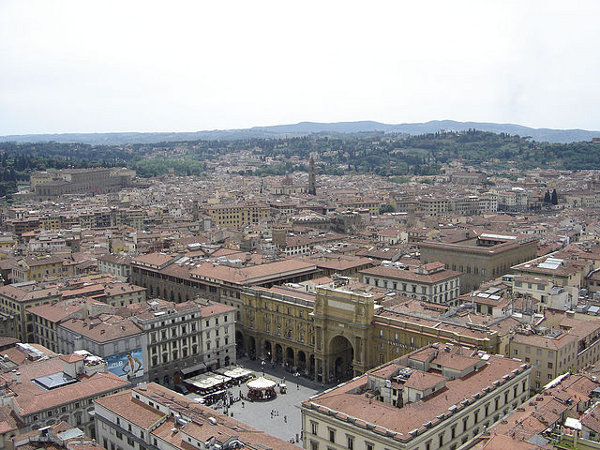
Florence, city of art par excellence, born in Florence great names such as Dante, Boccaccio, Machiavelli and Galileo Galilei. Florence has also been graced by the works of Michelangelo, Brunelleschi, Botticelli, Donatello and Giotto.

Anyone visiting Florence is never left disappointed! This is due to a cultural and artistic heritage almost unique in Europe and in the world, which has its base in the Middle Ages and the Renaissance in its heyday. Florence, along with Rome, are the history of our civilization. In Florence, in the fifteenth century, were postte the basics to revive art and culture. Here, thanks to writers such as Dante, Petrarch, and Machiavelli was born the Italian culture and language. Artists such as Botticelli, Michelangelo and Donatello made one of the artistic capitals of the world.


SOME 'OF HISTORY


Florence was founded in 59 BC by the Romans, who named Florentia.Si note the "cardo maximus" in the current Via Strozzi, Via degli Speziali and Via del Corso, and the "decumanus" Calimala in the street, Via Roma, Via Por Santa Maria . In the Piazza della Repubblica was the Forum. During the imperial period the city saw increasing its wealth, became a shopping center where there were craftsmen in the workshops, which then make the famous Florence. During the barbarian invasions, the city suffered many sieges by the Ostrogoths, the Byzantines and the Goths of Totila. Since the invasion of the Lombards at the first mention of a Duke in the city, the people gathered around the Bishops, in fact at that time they build monasteries, which became centers of culture and business. It was conquered by the Lombards in the sixth century, and only later the city emerged from the mists of the Middle Ages as a city-state indipendente.Quando the Lombards were defeated by the Franks, the Duke was replaced by Count. The Counts were succeeded by the Marquis, one should remember the admiration of the people of Florence for the Countess Matilda in 1085 that armed himself against Henry IV, and guaranteed to the town half a century of wise policy. He reached the highest heights of splendor between the eleventh and fifteenth centuries, becoming one of the major centers of power in Italy, a balance between the authority of the Emperors and Popes, overcoming the problems of internal fighting between the Guelphs and Ghibellines. In the fifteenth century Florence came under the rule of the Medici family, wealthy banking dynasty that later became the Grand Dukes of Tuscany. Florence and throughout Tuscany remained under the rule of the Medici family for three centuries. It was just that the heyday of the city, from the point of view of artistic, cultural, political and economic. The city grew in a frightening way. Painters, sculptors and architects filled streets, churches and buildings with the greatest works of the Renaissance. The Grand Duchy of the Medicis was succeeded, in the eighteenth century, that of Lorraine, until 1860, the year in which Tuscany became part of the Kingdom of Italy of which Florence was the capital from 1865 to 1871.

FLORENCE, 1000-1300


The city of Florence in the XI and XII expands and went to the south, on the right bank of the Arno. Over the river rose the first villages, and then in 1172 they built a second wall. Within the first wall, the urban fabric was very thick, consisting mainly of case-towers, however, between the first and second wall construction was much more sparse and regular, consisting of terraced houses. Between the twelfth and thirteenth century, the city increased its sales force, the core of this force is made by artisans, blacksmiths, shoemaker, of the goldsmiths, with particular development in the processing of wool. At the end of 1100 the city had reached its municipal autonomy. In the thirteenth century the government was made by the Consuls, with the help of Citizens Advice. Those who held power in the higher classes were chosen accordingly rivalry arose between the richest families. The families were brought together in alliances, this condition goes under the company name of the towers, the houses grew in height, if they became a fortress and by movable bridges, allied families, formed a system of towers easily defensible. The condition of the company town imposed an architecture of houses elongated vertically, with narrow openings, holes and brackets for the beams of the movable bridges. The discord between the major families became more and more severe until the formation of two parties, the Guelphs that loyal to the Pope hostile to the Emperor, and Ghibellines, loyal to the Emperor hostile to the Pope At first the Ghibellines had the upper hand, but the Their success was short and in 1250 the Guelphs returned to power. The City had a sort consists of the Signoria and the city enjoyed a period of great prosperity. In this period, the treaties of alliance with Lucca, Siena, Arezzo and purchases of Volterra, San Gimignano, Poggibonsi. All this wealth did rekindle the conflict between the Guelphs and Ghibellines, and after a short period of Ghibelline domain, the Guelphs resumed power and finally claimed their rule over the city. Great importance was divided into major and minor guilds, among the major arts were the Arte della Lana, that of Calimala, one of the Judges and Notaries, Physicians and Apothecaries, which brought wealth and prosperity in the city. At the end of the thirteenth century, is defined as the political and religious center of the city, with the construction of the Cathedral of Santa Maria del Fiore and Palazzo Vecchio. The triumph of the people, also led to the triumph of his tongue "vulgar", which is stated as written and spoken language, because of all the dialects was the most harmonious. With the wealth was the desire to make the city more beautiful, have the first Florentine personalities such as Cimabue, Gaddo Gaddi for painting, Arnolfo di Cambio for sculpture, and announced the genius of Dante and Giotto. There is a plethora of churches: S. Michele Visdomini, SS. Apostles, St. Nicholas, Santa Margherita Sopr'Arno, which will be added to the Baptistery and the church of Santa Reparata.

Florence, 1300-1400


In the first half of the fourteenth century there are very important events for the social and economic life of Florence. Under the pressure of the growth phase, there were many plants of new towns, in fact the Walled Terre Florence, were intended to support the choices of the local political formations, taking the leadership. At the beginning of the century the urban fabric of the city and the development lines developed in the previous century do not undergo modifications background. L 'last walls began in 1248, was completed in 1333, the circle included the towns and new industrial, religious, that were formed outside the doors of some of the existing roof, near the main road axes. Some of the new poles were born to the action carried out by various mendicant orders (Carmelites, Franciscans). These were orders from time settled in the vicinity of the previous circle, along the main routes: Via Romana, the paths towards the Valdarno, the way to the area of ​​Prato - Pistoia, the way to Mugello and passes towards Bologna. In addition to these settlements along the circle you had settlements of a patrician, who had created important changes in the urban fabric. Then you notice a rise of new building types. The phenomenon was due especially to the richest families, who had strong interests in the countryside. Other changes occur in the area within the ancient circle of 1078, particularly in the area around the market. These interventions require a readjustment of the city to the new functional requirements and especially the image. This century is characterized by different lines of transformation of the urban fabric. Large families were the protagonists of the aggregation properties of the building, and typological transformations. In these classes we owe the creation of hospitals, charitable religious. The rules were issued by the Judiciary and bodies of the Municipality, and took care of the line referred to the initiatives of the public, so the places intended for public representation and the city's infrastructure. Another line of transformation was that of the new building initiatives, the promoters were generally religious bodies or other corporations, such as the Arts The building type was that of houses arranged next to each other, located on lots with front road greatly reduced. The Florence of this century was renewed with respect to the thirteenth century, but the pattern of operation was always the same. The urban fabric was configured according to a hierarchical conception and in its parts, which in its functions, and then reflected the hierarchical structure of the institutions of the time. After that was completed last walls, the territory was divided into four districts, each district was divided into four banners. In the oldest, the one around the Old Market, there were the residences and shops of many ancient families, as well as major political offices. In particular, had settled the premises of the Arts principal. This is then presented as a very saturated, characterized by a street fabric minute, and a housing very thickened. In the confined space of the oldest part of the city, were opposed to the squares around the Cathedral and the Baptistery. A fabric was more contrasted between the band occupied by the penultimate circle and the circuit last circle. In this area the plot very dense houses and small shops, were the great monastic buildings or religious mendicant orders of the Franciscans and Dominicans. The towers were frequent in this part of town, some of which were incorporated in other buildings. In correspondence with small squares were the Lodges who welcomed meetings, becoming a standard in the relations of Florentine life. In the center of the city there were many construction sites, aimed at creating works of prestige, because continuing the work of the Cathedral (Santa Maria del Fiore), where it works is that the Talents Giotto, the Campanile of the Cathedral. Next to the cathedral were built, the church of Orsanmichele, the Loggia del Bigallo, working at the Loggia del Mercato, the Loggia dei Lanzi was redone the Dominican church of Santa Maria Novella, and the Franciscan Santa Croce, Palazzo del Podesta (the Bargello), the system Piazza Signoria. It also worked to Carraia Bridge and Old Bridge (rebuilt in 1345). An important feature was that the presence of shops on the bridges (now remained only on Ponte Vecchio). The work of architectural renovation of the city, were assigned to Arnolfo di Cambio, thanks to him the Gothic style, popular in Europe by the Order Cluniac, acquires a balanced character, mediating with the Romanesque style manages to get in buildings, both civil and religious, an example of Gothic solemn, with bursts of content and harmonious. The city was splitting into two distinct parts: a more centrally located to the north of the river, the other outer lying around the first. The course of the Arno functioned as the backbone for the whole city, in fact there were excavations river, mills, fulling mills, was also an important source to pick up gravel and sand for construction. The clear articulation between parts of the city not to be found in the distribution of classes in the urban fabric of the city. The upper classes were not above the contact with the subordinate classes, the social fabric was mixed, next to the palace of the noble was flanked by the workshops, the craftsmen's workshops. At the end of the century we are increasingly close links between the citizens of Florence and the countryside. The landscape is modified by the interest of its citizens to invest in residences outside the city and the landscape takes on the appearance built and designed that has so captured the imagination of visitors.

FLORENCE, 1400


The fifteenth century is for the city of Florence, a moment of recovery, both economic and cultural. The glory that you have given life to these new impulses, which then express the concept of rebirth, renewal of art, which will give birth to the Renaissance, goes all the city, which becomes the focus of this cultural movement. The Renaissance since its first phase of training, around the beginning of the fifteenth century, develops new issues, approaching the ancient with the spirit of innovation. The movement appears to be closely connected with the new Florentine merchant class, and just the new class, consisting of the families of the Picts, the Rucellai, the Medici, Strozzi, become promoters of the new culture and the new architectural taste. The Medici family, first with Cosimo the Elder, then with Lorenzo the Magnificent, he collaborates with artists, philosophers, studying fervently that the real debug a conception of 'man that expresses the desires of the new Signoria. As part of the culture of the Florentine Renaissance, Cosimo the Elder, who was the head of this great renewal movement, protecting the artists, encourages building initiatives and artistic useful to the city. In his dwellings met the Platonic Academy, Cosimo and after him Giuliano and Lorenzo were an active part in the debates, discussing good governance and art. Great fervor took place in the literary field, with Poggio Bracciolini, Coluccio Salutati, in philosophy, with Marsilio Ficino renewing the Platonic Academy at Careggi, we find in the architecture, Filippo Brunelleschi, followed by Michelozzo Michelozzo, Leon Battista Alberti, Bernardo Rossellini , Giuliano da Majano, Giuliano da San Gallo. Stimulation of this of this work is the study of 'art, culture and the Greek and Roman philosophy, studied scientifically. The artist will use traditional techniques, with a new consciousness, trying to deepen the investigation into the nature of reality and then the Renaissance artist, following this path, it works by combining the art scientific knowledge, which becomes common matrix , from which the artist can not be separated. Nature and art, they become two important factors, the knowledge of reality presupposes the study and knowledge of new media, the artist will be in perspective, perspective, which becomes an instrument of knowledge to measure and reproduce reality. These new studies will give splendid results in the fields of painting and sculpture, and will form the basis of the greatest works of painting, architecture and sculpture. In architecture the new studies are answered in the work of Brunelleschi, Donatello and Masaccio with, a key figure of the Florentine Renaissance. His masterpiece is the dome of St. Maria del Fiore, which summarizes its activities in a comprehensive manner. In addition to the Dome, working at the Ospedale degli Innocent, the Old Sacristy of San Lorenzo, around 1423, the Church of San Lorenzo, the church of S. Spirit in 1436. Between 1429 and 1443, directed the work of the Pazzi Chapel, Brunelleschi was the creator of the classic Renaissance palace in Florence, Palazzo Pitti is an example. The new mercantile society, is revealed in the elegant and robust architecture of the mansion. We have initiatives of groups fixing power in areas not central residences, too, for the greater ease of finding areas in the outer zones of the fabric of the city. You therefore have important consequences for urban planning, projected towards the affirmation of the desire of the leadership group, and enter the phase involving the new types of Renaissance palaces. The buildings that are built tend to define a type of regular building, with a square plan, an inner courtyard with columns. Palazzo Medici, Palazzo Pitti, Palazzo Strozzi, Rucellai Palace, are the new buildings that reflect the assertion of the wealth and power of the leading Florentine families.

https://tuscanysea.com/backoffice/immagini/tuscanysea.com/20-17-5-2013-11-7-151.jpg https://tuscanysea.com/backoffice/immagini/tuscanysea.com/20-17-5-2013-11-7-152.jpg

by Valentina