Search

Category Archives: Surroundings

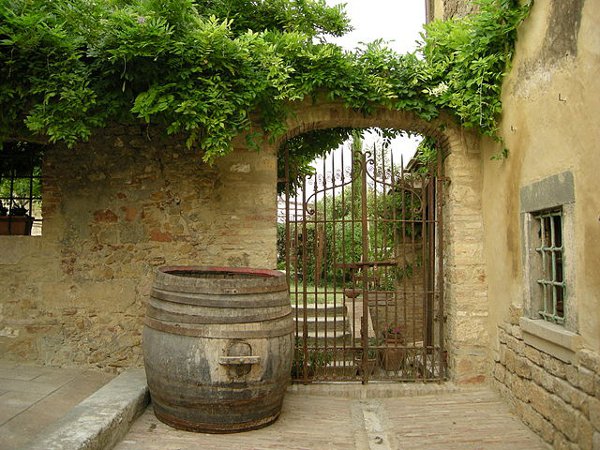
Guardistallo

The second of the "Three common", located on the crest of a spine running parallel to the sea. And 'animated by lively activities and village has a theater of the last century. In the older part still shows traces of the earthquake of 1846.

The name Guardistallo before Gualdistallo is of undoubted Lombard origin. The first human settlements, documented by archaeological finds, have been traced back to the prehistoric period. Finds axes and knives of stone and bronze, burials took place according to the rite of interment in a crouched position, testify to a human presence Guardistallo 4-5 thousand years before Christ. The finds are in the prehistoric section of the Archaeological Museum of Florence.

The castle of Guardistallo was under the dominion of the Counts of Gherardesca, branch Montescudaio, about the year one thousand until the fall of the Republic of Pisa in Florence in 1406, when it became a municipality. The statutes were drawn up together with those of Montescudaio and earned for both countries, many magistrates were unique. In 1447, like many other castles of the Val di Cecina, was occupied by the troops of Alfonso of Aragon, King of Naples, which destroyed most of the houses and buildings. However, remained standing in the keep of the castle of Auditors, which was shot down only by the earthquake of 1846.

Missing news on the sixteenth and seventeenth centuries, we only know that in 1551 Guardistallo had 428 inhabitants.

In 1739 the territory was incorporated in the estate of the Marquis Carlo Ginori composed of the territories of Cecina, Riparbclla, Farmhouse and part of Bibbona.In those years from the coastal plain spread malaria that made many victims, including in countries hills and thick woods that prevented ventilation contributed to aggravate the situation. In 1742, the Targioni Tozzetti visited the country and described it thus: "Guardistallo was already huge castle, but today has suffered a lot and there are many ruins [...]. Has the nearby woods and has very good water. He is, however, true that anyone who does not have to beat the plain in the Summer, you bell and very healthy. "From the coastal plain in fact spread malaria that made many victims, including in countries hills and thick woods that prevented the ventilation were aggravating the disease. In 1745 Guardistallo had 415 inhabitants and was not increased compared to 200 years ago, but even that had suffered sharp decline of the population that is found in many other towns in the area at this time.

After the dissolution of the feudal system and the redistribution of land in the sphere of agrarian reform Leopoldina is also formed in Guardistallo, starting from 1776, a new class of wealthy landowners who favored the development of agriculture and subsequent growth of the country in Guardistallo 1833 had 1,140 inhabitants.

On 14 August 1846 the countries of the Tuscan coast were struck by a violent earthquake that struck in a few moments houses, palaces, churches and towers. Much of the medieval castles in the area between Casale, Volterra and Pisa was destroyed on that occasion. Guardistallo, along with Orciano VaI in Tora, was the country that reported the most damage. 70% of homes were destroyed and part of the castle, the highest in the country, was completely ruined: the keep of the castle with surrounding homes, the church with the bell tower and the cemetery were reduced to a pile of rubble. 117 families were left homeless.

In his book Story of Tremoto, published in Pisa in the same 1846 Leopoldo Pilla describes the situation of the country: "When you say that the earthquake of 14 August reduced the country of Guardistallo into a heap of ruins, nothing left to add. Not a house, not a roof was almost saved by the whirlwind that art does not demolish. [...) And yet, in the midst of such upheaval, among many extended mine that country does not matter that the death of an only child. Amazing what! [...] The huts were badly costrutte from top to bottom nabissate. [...] The (Franceschi home) had all the boxes in front of the wall collapsed and strapiombato in its upper part in a frightful manner, but standing. [...] A young man gave Guardistallo have proof of great courage in the occasion that you had appuntellare that wall to prevent its fall to finish smashing the neighboring houses.

After the earthquake there is a phase of reconstruction and expansion of the country. In 1870 the new church was built on the side of the town facing the sea and almost contemporary is the construction of Villa Elena, residential house of Marchionneschi, one of the most important families of Guardistallo. In 1883 they built the Marchionneschi even a theater, a place of recreation for the rich families of the district and the expression of their wealth. E 'with reference to these times and reminder of the elegance of the life of his lords, that Guardistallo was also called "the little Paris" and its inhabitants were known as "Longstocking".

At the end of World War II, in 1944, the retreating German army put in place a fierce retaliation in response to guerrilla actions that took place in the area. Sixty-three people, including women, boys, many of the displaced and the mayor, elected just the day before, were captured, brought out of the country and shot. A second massacre of another 120 people were prevented at the last moment only by the courageous intervention of the parish priest, Don Bunch Rafanelli. The site of the massacre, along the road to Cecina, is marked by a memorial and the day of the massacre, on June 29, is commemorated every year with a procession. Ever since the war the number of the inhabitants of Guardistallo is declining and the last census fell below the threshold of 1,000: 936 souls from country to campaign against 1,002 in 1981.Oggi the country is geared mainly towards tourism.


Taken from the Guide to the Val di Cecina, curated by Susanne Mordhorst, New Image Publishing

https://tuscanysea.com/backoffice/immagini/tuscanysea.com/21-17-5-2013-11-10-361.jpg https://tuscanysea.com/backoffice/immagini/tuscanysea.com/21-17-5-2013-11-10-362.jpg

by Valentina
Follonica

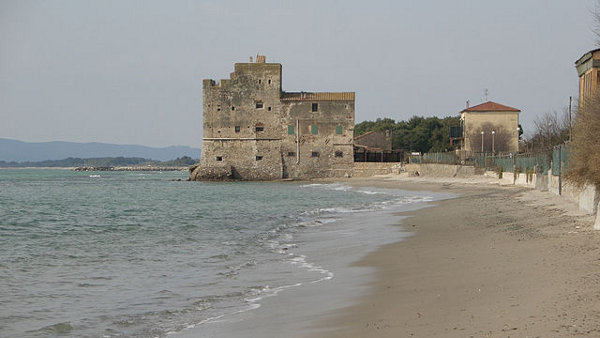
Follonica is a beautiful seaside town in the province of Grosseto, overlooking the magnificent sea of Tuscany.

Famous for good hospitality and its sandy beach, combining the good liveliness of the town with the pure sea, named Blue Flag for several consecutive years.


The reception is based on a number of Hotels, Residences, Apartments and Bed and Breakfast.

Particularly popular with families for the tranquility of the place and the sea is always calm and goes down very slowly.


source : www.follonica.com

by Valentina
Livorno

From the origins to the Medici.

The first historical evidence relating to Licorno dates from the ninth century, when the settlement was nothing more than a fraction of the Port Pisano.Il Its development began in the late thirteenth century, when, with the statutes of Pisa in 1284, it was determined that the captain the port had to live in Livorno.Gli same statutes, in order to populate the harbor village, They arranged for special customs facilities and privileges to all those who, within the next ten years, they decided to establish his residence and activities Livorno.Ma August 1284 Pisa and Livorno were attacked by the Genoese and Lucca, which arrecarono a lot of damage to the towers and castle Livorno.Siglata peace in 1299, began the reconstruction period, which culminated with the fortification of the port of Livorno. Inextricably bound to Pisa, Livorno suffered the same sorti.In following the killing of Peter Gambacorta in 1392, lord of Pisa from 1370, the city and its port passed for several years under the rule of the Duke of Milan Gian Galeazzo Visconti. Pisa was able to rebel against the dominion of the Visconti in 1405, but the following year it had to surrender to a new enemy: Firenze.Livorno in the meantime had passed under the government of Genoa, which lasted until 1421, when the Genoese decided to consent to repeated request of Florence to buy Livorno.Il Doge Tommaso Fregoso, being in need of money to defend the Republic of Genoa from the Milanese, revenges Livorno to Florence in June 1421 for 100,000 gold florins. To purchase the Florentine Republic Livorno meant to have a port of its own for those international trade for which Florence had long famosa.Esattamente as he had done in 1284, Pisa, Florence also decided to facilitate the population of Livorno.Molti Florentine artisans settled there to build galleys desired by the republic for the transport of goods.

1200 florins a year were allocated for the construction of a jail every six mesi.La Republic also decided to keep in Livorno a series of tax breaks to allow the development of the port city which later silting of the port of Pisa soon became the first port of call is the Toscana.Ma with the ascent to power of the Medici that the history of Livorno lived a real svolta.Già the beginning of the sixteenth century, Cardinal Giulio de 'Medici, then ascended to the papal throne in 1523 with the the name of Pope Clement VII, commanded by Antonio da Sangallo the Elder design for a fortress difensiva.Non are certain the dates of construction of what is now called the Old Fort, according to some historical fact, the defensive building was erected between 1521 and 1524, while according to others the work continued until after the 1530.E 'instead sure Sangallo fortress incorporated into some existing structures like the tower of Matilde and the "quadrature of Pisa."


Livorno under the Grand Duchy of Tuscany.

The first Grand Duke of Tuscany, Cosimo I, in 1548 issued a law with which was granted to any person who decides to settle in Livorno, the cancellation of any debt incurred in precedenza.La law meant that by the mid-sixteenth century Livorno began to learn about the phenomenon of immigration destined to become more and more consistent with the laws of the 1593.Cosimo I also ordered Giorgio Vasari, a project for the construction of the new pier, and in the meantime he thought to further fortify the city continued to grow in importance . Once dead Cosimo I, his son Francis, he continued the work, addressing the architect Bernardo Buontalenti for the design of a new Livorno, a sort of fortress city with the Cathedral at its March 28, 1577 centro.Il the same Francis I , during a solemn ceremony, laid the foundation stone of the new walls of the Medici Grand Duke Livorno.Il that more than others, however, tied its name from the city of Livorno was Ferdinand I, brother of Francis I and came to power in 1587. It was in fact ordered to Realize the project Buontalenti. Livorno therefore became a city with strong walls surrounded by a waterway, full of palaces, warehouses, barracks and other dogane.Un waterway joined Livorno Pisa.Ma what most of all contributed to the rapid development of the port city was the publication. June 10 of 1593, the famous "read Livornine" in favor of the merchants of every place and every religione.In practice it was a real indulgence with which he favored the

Population of the city, giving political asylum to all those who wished to settle in Livorno and open up a business. Law favored especially the Jews, who landed in the Tuscan port a bit 'from all countries Europei.Nel 1606, three years before death, Ferdinand I wished to crown his work by raising the honor of Livorno city.The son of Ferdinand, Cosimo II, found itself to administer a city flourishing, full of artisans and merchants, where they crossed races and cultures very different between loro.Livorno, in the seventeenth century, was a rare example of coexistence among many peoples and at the end of 1700 had already become the second largest city in Tuscany with 80,000 inhabitants (Florence had 100,000). Under Cosimo II was made the Medici Port, and the city was declared a free port.


Livorno today.

With Cosimo II closes the period of maximum development of Livorno, which however continued to thrive seeing their commerci.Nessuno of the Grand Dukes later took it to the city customs privileges that had allowed the rapid evolution. With the annexation of the Grand Duchy of Tuscany to the Kingdom of Italy, Livorno underwent a new development, no longer linked only to the commercial port, but also to some industrial activities connected to it.

To shipyards slowly joined by other industrial activities (chemical, petrochemical, engineering, conservation of fish) that have now made Livorno a modern and very attivo.Anche tourist activity emerged in the late nineteenth century, transforming a station in Livorno much sought after and renowned seaside resort at the start of our secolo.La city experienced an important cultural season, inspired by writers such as

Marranos, and painters like Modigliani Factors and musicians such as Pietro Mascagni, all of birth Livorno.

The Second World War caused much damage to Livorno, who also knew how to recover through rapidità.Oggi the city has more than 170,000 inhabitants, and the province, which stretches all along the coastline, includes 20 Comuni.Ben five of the seven islands that make up the 'archipelago toscan0 are also in the province of Livorno: Gorgona, Capraia, Elba, Montecristo and Pianosa.


ART

Churches and palaces

The center of the ancient city designed by Buontalenti represented by Piazza Grande, which overlooks the cathedral dedicated to Saint Francis, and built between 1594 and 1606 and designed by Alessandro Pieroni.Il cathedral was later expanded during the bombing 1700.I World War II earned him considerable damage to the Cathedral of Livorno, which was then rebuilt along the lines originali.L 'interior has a Latin cross with a single nave, and there are precious works, such as the Assumption of Passignano and St. Francis receiving Child of Mary Empoli. To the right of the entrance you can admire the monument to the Marquis Marco Alessandro del Borro, the work of the Florentine artist Giovan Battista Foggini.Piazza Grande was completely rebuilt after the Second World War, and therefore the buildings surrounding it are all impression moderna.Dietro to the Grand Palace, which is located in front of the Duomo, opens wide the Town Hall with the Town Hall built in 1720 and designed by John Fantasia.All the 'interior of the building it has a fine painting of Sustermans, which portrays the Grand Duke Ferdinand II in the act of receiving the mercanti.Imboccando Via S. John arrives at the church of the same name originally from the thirteenth century and enlarged in 1624.Non far from the church of St. John the Baptist is the temple dedicated to Santa Caterina, which is also an eighteenth century work of John of fantasy within the coronation of the Virgin of Giorgio Vasari.Ancora to oggini must instead the design of the church of San Ferdinando, also called the spreader, built between 1707 and 1714.Senza doubt it is one of the most interesting churches in the city with beautiful works of Giovanni Baratta all ' interno.All 'corner between the Piazza Grande and Guerazzi is the palace of the call a beautiful building built in 1707 for use militari.Non far it meets the Costernino, ie the building where it was regulated water distribution. The Costernino is the work of neoclassical structure designed by Pasquale Poccianti in 1842.Pochi years before, between 1829 and 1832, the same Poccianti had achieved Cisternone, ie the reservoir of the aqueduct. Near the Cisternone is the Palazzo De Larderei school, built in neoclassical style in the well 18321850, industrialist De Larderei.

Just south of Livorno is the Shrine of Our Lady of Montenero, built in the sixteenth century on a hill instead of a pre-existing oratorio.Secondo to legend, in 1345, an image of the Virgin Mary came from the island Ardenza Eubea.L ' image was brought by some hermits on the hill and enclosed within a oratorio.Ben soon the fame of the miracles of Our Lady of Montenero spread along the Tyrrhenian coast, and the shrine became a place of pellegrinaggi.Alle walls of the sacristy are many votive testifying the cult that has grown over the centuries around the Madonna di Montenero.


The city Medici

The heart of the ancient city is the Cathedral, built by Bernardo Buontalenti at the center of the pentagon wall that surrounded the Livorno Rinascimento.Il the Royal Canal marks the ancient town in the south, while to the north-west and north-east are respectively the Old Fortress and the Fortress Nuova.Voluta by Duke Alessandro de 'Medici the Old Fortress was designed by Antonio da Sangallo.I works for the construction of the fortress began in 1531 and lasted until 1537.La fort has a perimeter wall of 500 three meters bastioni.Su one of the two portals of entry is the coat of arms of the Duke instead Alessandro.La New Fortress was built in 1590, under the Grand Duke Ferdinando I, the design of Giovanni de 'Medici, Vincenzo Bernardo Bonanni and Buontalenti.In Originally, the two forts were linked by a curtain that was torn down during the seventeenth century to make room for new neighborhoods of Venice and San Marco, the most characteristic città.Immediatamente south of the Old Fortress opens the Medici Port, with the old dock, Fortino's Sassaia and Molo Mediceo.Da latter reach the Tower of the light, erected the first time in the sixteenth century and destroyed during the War mondiale.La tower was rebuilt in 1955 according to the guidelines originarie.Alla its base are the remains of the hospital built by Francis I in 1582.

On the eastern side of the Old Dock-open piazza Giuseppe Micheli.E 'here that was erected in 1607 what later became the sculpture symbol of Livorno: the Monument to Ferdinand I, also known as the Four Mori.Si is a statue the Grand Duke in the uniform of the Knights of Santo Stefano sculpted by Giovanni Bandini and placed on a plinth around which there are four Moors in chains, to be cast by Pietro Tacca and added to the monument at a later tempo.I four Turkish slaves were merged with cannons taken from the Arabs and the Turks won by the soldiers of the Grand Duchy during the daring expedition in 1607 by Ferdinand I really wanted to conquer the city of Hippo.


I Macchiaioli and museum Giovanni Fattori.

Around the middle of last century, Florence was formed the most important and constructive work of the Italian artistic movement, that of Macchiaioli.La school macchiaioli was born in opposition and contrast academicism that had characterized the first half of the century with its "Historical paintings." The theory was the basis of this artistic movement was that of the "spot", which chronologically precedes the French impressionism and that in some respects there avvicina.I macchiaioli believed that the painter had to make exactly what the human eye perceives, ie colored patches of light and ombra.Il more representative of the movement of macchiaioli was the painter Giovanni Fattori, born in Livorno in 1825.E right in the most important exponent of the "stain" Livorno titled a museo.Il Civic Museum Giovanni Fattori located in the park of Villa Fabbricotti, in a building ottocentesca.Il museum houses a collection of paintings of factors including "Haystack, Oxen, Antignano, On the Beach, Red Tower, Lutteri Battle of San Martino, Mrs. Martelli, Portrait of the Wife. " The Museum possesses some ancient works such as the Madonna and Child attributed to Sandro Botticelli and the Crucifixion of Blacks by Bicci.


Museo Civico Giovanni Fattori


Villa Mimbelli

Via San Jacopo in Acquaviva

Phone 0586.808001 - 804847

The important collection of paintings by Giovanni Fattori and other Macchiaioli and post macchiaioli stored at Livorno - that was the birthplace of factors - has received a rational arrangement and a worthy place in the prestigious Villa Mimbelli.

In the beautiful rooms of the Villa, built in 1865 by architect Giuseppe Micheli and recently restored, the civic collection 'was rearranged according to a precise criteriostorico artistic and enriched by a new group of interesting works hitherto preserved in deposits.

Overall we were able to have on the three floors of the works so far villacecentotrentasei depositi.Oltre preserved in the paintings of factors, which are the most 'valuable riccae of the collection, the new Museum offers the public the chance and aglistudiosi' to appreciate famous and important operedi painters, such as, Silvestro Lega, Caesar and John Bartolena, the Tommasi, Vittorio Corcos, Michele Gordigiani, Leonetto Cappiello and others, that have characterized the artistic events italianea horse between eight hundred and nine hundred

https://tuscanysea.com/backoffice/immagini/tuscanysea.com/23-17-5-2013-11-18-561.jpg https://tuscanysea.com/backoffice/immagini/tuscanysea.com/23-17-5-2013-11-18-562.jpg

by Valentina
Lucca

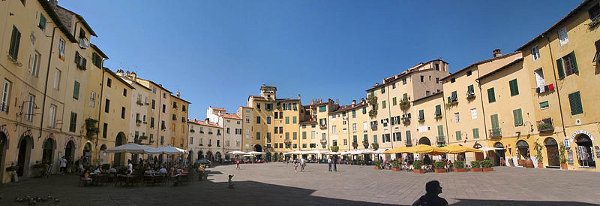
Lucca is definitely one of the jewels of Tuscany, mindful of the great moments of splendor, arts, crafts, economy and culture. E '"the encircling the city" as he celebrated the unforgettable Gabriele D'Annunzio. The first traces of man found in the area lead back to the Ligurian people but with the Etruscans, like the rest of Tuscany and the Maremma low, you see a population increase combined with the economic and artistic growth, through trade and trade. The Etruscans and the Romans after they left valuable evidence, the remains of which are present all over the territory.

With the Romans in 89 BC, became the town hall and was perhaps the most intense period of turmoil that lasted about two centuries.

After the Romans it was the turn of the invaders took turns on the conquest of the Italian territory, and obviously suffered the same fate in Lucca, road junction of major roads. First came the Goths, then the Byzantines, the Lombards and later became a duchy and with whom strategic shift, and partly forced, down toward the valley of the Tiber to move to the other Lombard kingdom, Puglia.

Lucca became important in Tuscany thanks to the leader Castruccio Castracani to Paul Guinigi who started the artistic and cultural development. But the reputation of Lucca went beyond the Italian borders spreading its fame thanks to the intense and rich silk trade with l 'Europe and Asia.

In 1799, the city was conquered by the French and by Napoleon, became a principality of Happy Baiocchi and Elisa Bonaparte, sister of the Emperor, until 1814. After the fall nopoleonica, the Austrians held the state until the Congress of Vienna that gave the Duchy of Lucca, in Maria Luisa of Bourbon and his son Charles Louis.

In 1847, Carlo Ludovico gave the Duchy of Tuscany Leopoldo 11, but already in the air were those liberal ideas that would lead a few years later, to join him to Italy.


The University of minters is very old and was already present allíepoca of Lombard rule. Many documents kept in the archives of the Archbishop, documenting their activities. The "Moneturius" (minter) formed a corporation and under the protection of St. Eligio was called Collegium Monetariorum "which was headed by a" Monetae Magister (Master of Coin). All those who belonged to this University were called "Overieri" (those who make money) and admission was not easy because it involved the knowledge of art, as evidenced by their freshman and was made to swear on the Holy Gospels commitment to exercise rectitude the profession granted to Lucca by various emperors. In the premises of the Inquisition of the Mint of Lucca, the "College of minters" is active again with the ancient methods of refining, merge, cut through metal (secrets jealously guarded by a few families of Lucca, called "De lineage Monetae").

Our production is aimed at the reconstruction of the ancient coin reconstruction is done by studying more specimens of the same in weight, size and style so to get a design and a well detailed model, from which they are made punches males, engraved and worked burin. The old Inquisition of the Mint has made in Lucca, at its premises in Via S. Andrea 45 (near the tower Guinigi), an exhibition that traces the history of money over the centuries and can be visited on weekdays and holidays from 9.30 to 13 and 14.30 to 19 dolle except Monday morning.


Visit the villas of Lucca company is of no small importance if you plan to exhaust the discussion of this theme with an excursion for a specified time, you run the risk of usual underwent a 'smattering of news accompanied by a sequence of images that - while picturesque and charming - never going to give us back the full complex of cultural and environmental values ​​of that civilization in the villas of Lucca realizes that - together with the walled city - its highest expressive moment.

More than three hundred large and small are in fact the residences in the Lucchese villa is built over more than four centuries on the most beautiful places in the countryside and the arc of hills surrounding the plain of Lucca, from the early fourteenth century settlements were born as lodges hunting, through the great sixteenth-century villas of the affluent middle-class families engaged in art and in the silk trade, which drew the land and the environment as a superb natural setting, to the numerous imitators that the revival of those models completed the landscape - in later periods and up to the beginning of the twentieth century - with an interminable series of gentle and civilized traits, such as those offered to the visitor even more hasty. This heritage is still all in private hands, which he often passed from one generation to 'other with tender care that the Lucchese manifest in the things that they know are desdnate to stay, and through it is developing a new way to propose to 'external appreciation through the rebirth of hospitality, typical production, hospitality culture and the liberal arts. The visitor is thus faced with a limited repertoire of monuments, but a permanent witness of values ​​that includes architecture, landscape, agriculture, traditional activities, food and wine, and even recesses of quiet and meditation, contemplation and spiritual regeneration, enjoyment of the environment in corrupt, in which it is necessary to penetrate with progressive enthusiasm, without the feverish restlessness of tourist to time, seeking as the measure for each one proves to be more convenient. In other words, on tiptoe.

Says Borchardt, he clearly recognized the Lucca and long stays there: "The villa honors already far away to visitors, ripagandolo of all that denies him until he èsemplice tourist". Anyway, this trip must be organized in one or more paths, none of which - say it now - will be limited to the theme of the villas of Lucca, perhaps because the temptation would be to wander around aimlessly, following a wall of stones picked clean by the wind and surprisingly elegant meeting tables of ancient palaces hidden among the branches of trees, or enchanted by strong scents of the wine bubbling in the cellar and wait for the hills resolve the rosy sunsets. It is a journey that has few stages safe and is often entrusted to the initiative of the ancient character of the stranger, the once neglected mails to stop and investigate signs of civilization, choosing them in the vast panorama as in the apparently insignificant details and what drawing from the rest for the spirit that - at the end of the pilgrimage - gave him the certainty more returning better than when he left.


National Museum of Palazzo Mansi

It was purchased in 1965 by the Italian State as the venue for hosting the paintings of the national museums of Lucca.

National Museum of Palazzo Mansi

Via Galli Tassi, 43 - 0583/55570 - Fax 0583 / 31.22.21 - Opening 9/19 festive * 9/14 * closed on Mondays.


Cathedral Museum

E 'consists of a thirteenth century tower house, a sixteenth-century church and a main body of the fourteenth century. On display are works of art that have characterized the centuries attachment and devotion to the emblematic figure of the Holy Face - ancient crucifix venerated in the Middle Ages throughout Europe.

In the sacristy of the Cathedral is visible what until now was considered that the tomb of Jacopo della Quercia carved llaria the Wheelbarrow - wife of Paul Guinigi who was the lord of Lucca between 1400 and 1430.

Cathedral Museum - Via Archbishopric - 0583 49.05.30 - Open daily April / Oct 10/18 - Nov / Tue 10/14 - Holidays 10/17


Lucca still retains its entire mighty walls, created primarily to strike military and administrative organization, because no one ever tried to capture it. The walls can be covered as a walk under a century-old trees that were planted allíepoca to cover the view of the towers in case of attack, but also as a supply of firewood.

In the following centuries the circle of ramparts was transformed into a sort of hanging garden suspended over the city. For centuries, the people of Lucca there had illegally planted small gardens, I had sent to graze their horses, while the ditches were used as external wheat fields or pastures for their herds.

The walk up the wall preferably on foot or in a carriage divenutaa in the eighteenth century was a must when you received principles strangers and an event not to be missed in the monotonous days of the nobility during the summer.

Even today, the ancient walls of the Lucchese have managed to preserve, protect the city center from the chaos outside, enveloping charm of one of the most beautiful cities díItalia and visitors should not miss líebrezza you feel in a relaxing and scenic stroll traveled for centuries of history.


The Villas of Lucca

The beautiful villas that can be seen in the most evocative of the countryside of Lucca, were built in the course of more than four centuries. There are over three hundred, including some fourteenth-century born as hunting lodges, like other great sixteenth-century villas of middle-class families and wealthy merchants of silk.

This heritage is still all in private hands,

meticulously passed down from one generation to another and strictly as. Only some of these villas can be visited today and can offer a welcome worthy of the best traditions of Lucca.

The structural matrix and formal Lucca is the presence of the villas, including this sense the whole of the villa itself: the whole property consists of real estate from the main building, the park, the farm, the farm houses, from the agrarian , by the woods and waterways. "The villa is harmonic distinction of vineyards and olive groves, cultivated fields and wild areas, houses of peasants and abode of the Lord" (Isa Belli Barsali) is the work of an urban middle class that invested the fruit of their earnings in land. A set built as a work of art, from a people refined. But this landscape, so popular today, it is not only the result of an operation of investment land. In the structural organization of this territory everything was kept in mind: the position of the land, water regulation, the order of the crops, the placement of buildings, the layout of the trees with great simplicity, modesty, functionality, order, poise, rigor. A common matrix for the organization and its definition is given by the accommodation in terraces or knolls of the land. With this technique, transformed the grounds of steep hill in flat parts, preventing soil erosion and harnessing the waters, regimate, you convogliarono where the man wanted to. It is the grand design of the Tuscan hills, is "adorned the amphitheater of hills" Borchardt, a series of signs, parallel to each other, curvilinear, that shape variously, but with continuity, the local context of the villa, constitute the bottom. It 's the result of the struggle, or the dialogue between man and nature to force, or to convince her to productive use, in accordance with its structure. It is the result of a secular work of which there are, in Lucca, certain documents by the end of the thirteenth century. This distinctive landscape Lucca is no exception to that Montaigne in the Journal de Voyage, in 1580, wrote: "On ne peut trop loeur the utilité et la beauté de la méthode de cultiver qu'ils ont les Montagnes jusqu'à the peaks, en faisant y, en forme d'escalier ... ". In the relationship between settlement hills and crops, including villa, garden and landscape materials used also play a fundamental role: they are cooked on-site materials, such as brick kilns of the local (now all abandoned or demolished), limes prepared with limestone ceroid of Santa Maria del Giudice, sands and pebbles of the Serchio, the stones. It is precisely the stone materials to act as constitutive elements such as rags construction or as a cutting material, are used in the enclosure walls, the gates in the architecture, in pavements, in creases in the decorative bands, in the frames of doors and windows, in houses and oratories. The quarries of Matraia and Guamo were those that were addressed, one to the north, the other south almost to serve impartially two shares significant settlement of the villas. Yet the stones were also used together in dialogue with the brick, with their diversity of color. Sites rich in springs or served by a stream, with straightforward as possible derivations, were the ones most sought for the construction of the villas. The water in the villa, not only performs tasks related to the purely functional home life and agricultural work, became the occasion for the creation of works of embellishment and fun, of pure pleasure. The architecture of the water together with the architecture of the green form the micro-landscape inside the closed area of ​​the villa; reach the highest levels of quality and hydraulic technique found in the many water lilies, ponds and fish ponds, with games secrets of water, varied architectural solutions, enhanced by statues and decorations made of rustic mosaics, stones of various colors, shells, with grotesque and monstrous. What nymphaeums are important and also studied the play of light that penetrate inside of these architectures in which the light beams form rainbows with the dust of water. But the game, the pleasure reunite properly, in a sort of civic sense and respect, which is typical of the soul of Lucca, to his neighbor: the water is not dispersed, is not altered, can shut down the available to the other.

https://tuscanysea.com/backoffice/immagini/tuscanysea.com/-17-5-2013-11-28-281.jpg https://tuscanysea.com/backoffice/immagini/tuscanysea.com/-17-5-2013-11-28-282.jpg

by Valentina