Search

Category Archives: Surroundings

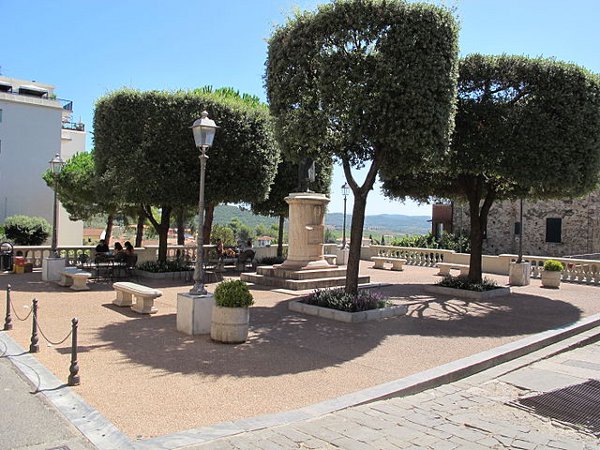
Suvereto borgo medievale Costa degli Etruschi

It 'a picturesque medieval village just a short walk from the Etruscan Coast. Its origins date back to before the year one thousand, and it was between the tenth and fourteenth centuries that took on the character still recognizable. In addition to the walls, were built in this period the Church of San Giusto, the Rock, the Town Hall and the Cloister of St. Francis. Fief of the Counts Aldobrandeschis, became a free city of the Republic of Pisa, and in 1399 became part of the Lordship of the Appiani. Since then, for some centuries, it was part of the Principality of Piombino, which was built in the sixteenth century Belvedere castle and the ironworks were built to Forni di Cornia. During the Napoleonic era was assigned to Elisa Bonaparte Baiocchi, who organized in the resort village wooded Montioni a productive and spa. In 1815 it became the Grand Duchy of Tuscany, which shared its fate until the unification of Italy. Its economy, a predominantly agriculture and forestry, have made it a lively town, including the first in the Province of Pisa and later in that of Livorno.

https://tuscanysea.com/backoffice/immagini/tuscanysea.com/37-17-5-2013-12-25-291.jpg https://tuscanysea.com/backoffice/immagini/tuscanysea.com/37-17-5-2013-12-25-292.jpg

by Valentina
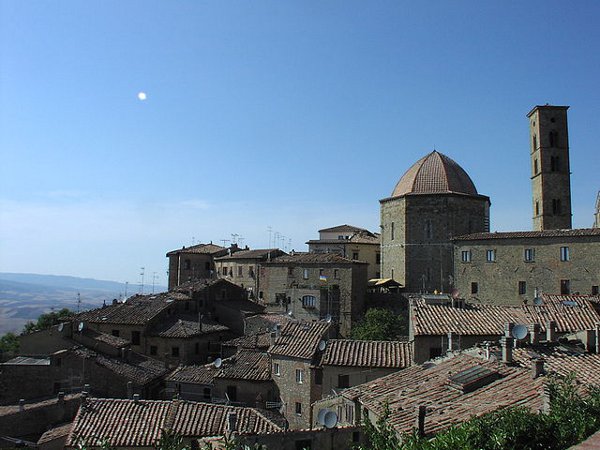
Volterra città etrusca medievale

Magic and mysterious city, Volterra has its roots in three thousand years of history. Of the Etruscan period are the walls, the Gate Arch, the Necropolis of Marmini and all the enchanting artifacts that are now preserved in the Museo Etrusco Guarnacci, one of the richest d 'Italy. There is also a famous legacy of the Roman era, which is the theater of Vallebuona, a must see, lying at the foot of the city. But the overall impact returns the typical image of the medieval town, with its narrow streets, lanes cakes, red brick pavement, towers towering over the houses, squares that open to surprise by a network of roads .

During the summer Volterra turns into one of the most brilliant stage of Europe thanks to the event "Volterra Teatro" who, with his bill full of performances and events will allow you to enjoy a holiday full of not only relax, but also of stimulants moments of cultural encounter.

The proper way to discover Volterra is to be guided by instinct turning freely. Glimpses, churches and squares will not take long to make his way in front of your eyes in disbelief, followed by pleasant encounters with craft shops (especially alabaster and leather) series and characters from sympathy throughout Tuscany. Whatever route you choose you will find yourself always in Piazza dei Priori with the nose to look at the facades of the Palazzo dei Priori and the apse of the Cathedral. It'll probably end up like everyone else, for a view down over the Gate Arch on the lookout overlooking breathtaking suit the hill.

The International Festival of Theatre of Volterra is held in July.

Proposes a mixed programming that includes theater, music, dance, video, poetry and is open to other initiatives that are not strictly theatrical humanitarian.


In July, we also take theater performances in the towns of Volterra, whose billboard is always available at the organization's "Volterra Teatro"

Peccioli

Pomarance

Castelnuovo Val di Cecina

Montecatini Val di Cecina

Monteverdi Maritime


The artistic director of the festival is Armando Punzo.

The organization is at your disposal at the following addresses

E-mail: carteblanche@iol.it

E-mail theater festival: volterrateatro@libero.it

Who gets to Volterra in the first days of July can contact the organizers at the office set up in the Piazza dei Priori.


Things to see in Volterra

Piazza dei Priori, Palazzo dei Priori, Porta d'Arco, Palazzo Viti, Duomo, Baptistery, Via Ricciarelli, Via Buonparenti, Guarnacci Etruscan Museum, Fortress Archaeological area Vallebuona.

helped make it unique in the cities. Of the Etruscan period are the walls, the imposing Gate Arch, the necropolis of Marmini and numerous archaeological finds in the Museum Guarnacci, the Shadow of the Evening, with its unique profile, the urns, the finely crafted jewelry . The Theatre of Vallebona, of the Augustan age is the importance of Volterra under Roman domination.

But it comes from the Middle Ages that the structure of the city that we find, not only in the walls, the inner one, but also in the urban layout, with its narrow streets, its palaces, tower houses and churches.

The Renaissance Volterra up substantially, but without altering the medieval atmosphere. From this period are the superb palaces of Minucci Solaini Dating-screws, Inghirami, input the Medieval city, the imposing Medici Fortress, the monastery of San Girolamo

Volterra is a city of museums. In addition to the Etruscan Museum there is the Pinacoteca Civica, with a fine collection of Sienese and Florentine schools, including the "Deposition from the Cross" by Rosso Fiorentino. The Cathedral Museum has an important collection of gold fourteenth-century sculptures of the Sienese school, miniatures.

The alabaster craft, moreover, that has woven its story

with that of the city, is another point of great interest. And while visiting the numerous exhibitions and workshops of snooping around the city you will be able to breathe a bit 'of that magical atmosphere surrounding Volterra.

But there's only art and history. The surrounding area is rich in natural beauty and landscapes that offer the visitor opportunities for excursions on foot, on horseback, by bicycle along miles of marked trails to discover unique places and caratteristiciVolterra is also famous for its gastronomic specialties of the Tuscan tradition and for its warm hospitality that is able to offer to every type of tourist with its numerous hotels, farms, apartments, equipped with a campground and a modern hostel.

During the summer also cultural events, such as VolterraTeatro, concerts of classical and modern music, art exhibitions and folklore events allow guests to have a holiday full of relaxation and tranquility not only, but also of stimulating moments of cultural encounter

The Alta Val di Cecina, in the municipalities of Castelnuovo Val di Cecina, Montecatini Val di Cecina and Volterra Pomarance, it is bounded to the west by the Cornia Valley and the lower Val di Cecina, north of the Val d'Era, for east by the Val d'Elsa and south by the Metalliferous Hills. It has a rich heritage of historical, artistic, archaeological and landscape almost to constitute a "unique" in Tuscany has inspired many writers, poets and painters such as Rosa, Stendhal, Lawrence, Dennis, Corot, D'Annunzio and Cassola.

Indeed, in addition to the testimony of ancient Etruscan, Roman, Medieval and Renaissance spread throughout the country and stored mainly in Volterra, a city of art and cultural center of the entire valley, the Val di Cecina shows a rich variety of landscapes ranging from metalliferous hills wooded areas such as forests Berignone-Tatti and Monterufoli, by the Mediterranean, the landscape of the "hills of Volterra" consists of gullies, crags and hills from the gentle slope.

On the eastern slopes of Poggio La Croce is Montecatini Val di Cecina the old Monteleone, dominated by a tower, at whose feet lies the village with the typical features of the medieval center built around the representative elements of political and religious power that are identified the praetorian palace with an elegant portico and in the fourteenth century church of S. Biagio.

Montegemoli is characterized by the emerging structure of the castle with its round tower and its Renaissance style.

Pomarance preserves important vestiges of its ancient past as the Gate and the Gate of Casale Orciolina of the fourteenth-century walls, the church of S. With paintings by Giovanni Roncalli, the Cercignani and dell'Ademollo, the Praetorian Palace and the palaces of Pucci, Bicocchi, Bardini, De Larderei.

Montecastelli is characterized by a massive square tower of the Middle Ages and the Romanesque church of SS. Philip and James (XIII) with three naves with figured capitals. In the vicinity of the cemetery, is the Buca delle Fate, an underground Etruscan sec. VI BC

In S. Dalmazio interesting are the remains of medieval walls with two gates that surround the village from the almost circular shape and the Romanesque church which houses a terracotta tabernacle from the workshop of Luca della Robbia.

Nearby are the ruins of the Rocca Sillana.

Montecerboli also has the circular form of an ancient castle with medieval village.

Castelnuovo Val di Cecina is surrounded by a beautiful forest and retains its urban form "cluster" where you can distinguish the different phases of expansion.

Sasso Pisano is built around its oldest part of the castle on the highest point of the site.

Serrazzano, interesting from a planning point of view, it preserves the view of urban, retains the medieval period two gates of the walls and traces of foundation walls to the shoe, as well as the church of S. Donato presenting within interesting Gothic vaults and the lovely Romanesque church of S. Antonio.

A square tower and the church of S. Martino characterize the village of Sassa, while to the right, on a rocky outcrop rises Querceto, interesting for all of the buildings that make up the villa castle and the beautiful church of S. John.

To the historical and artistic treasures of the Val di Cecina combines the richness of its endogenous products. The alabaster, with which products are made of fine crafts, rock salt, extracted in the industries of Saline di Volterra, and the heat of the geysers that is used in thermal power plants at Larderello, typical industrial center with the church designed by Michelucci and an interesting museum of Geothermal Energy.

Ponteginori, built in 1919 by the company Solvay, is in Val di Cecina a unique example of industrial village typical of the mining areas of northern Europe.

Libbiano, Micciano, Lustignano and La Leccia built on hillocks still attest to the urban form of the ancient origin castle.

https://tuscanysea.com/backoffice/immagini/tuscanysea.com/38-17-5-2013-12-28-21.jpg https://tuscanysea.com/backoffice/immagini/tuscanysea.com/38-17-5-2013-12-28-22.jpg

by Valentina
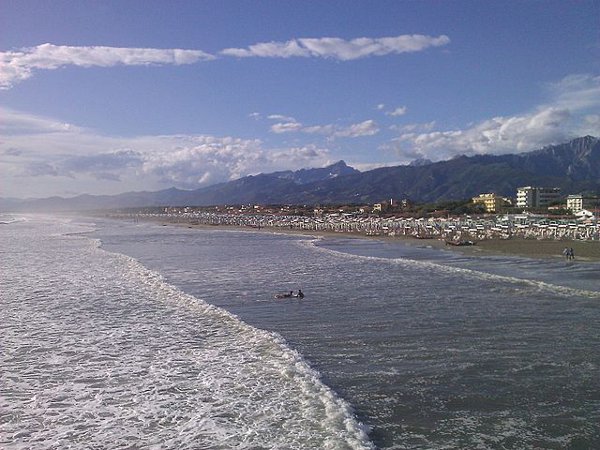
Versilia mare montagna tradizioni

The sea and the wonderful beaches, the plan thriving and fertile, the gentle hills, the charming towns and the beautiful mountains of gleaming white marble, fused together in a harmonious incomparable harmony, form one of the most attractive and exclusive districts of Italy , Versilia.

It covers an area of ​​about 165 square kilometers, the coast, sandy and shallow, extends for 20 km, and its mountains reach heights of 1800 m and beyond.

And 'bounded on the north by the mouth of Cinquale, east from the ridge of the Alps, south of Massaciucoli Lake and west by the Tyrrhenian Sea.

The territory is divided, for the Versilia, in the towns of Pietrasanta, Forte dei Marmi, Seravezza and Stazzema, while for the remainder, in the municipalities of Camaiore Camaiore and Viareggio. All of them belong administratively to the province of Lucca. The historical Versilia remained belonging to the Diocese of Pisa as opposed to Camaiore, Viareggio and Camaiore that are part of the Lucca

The territory is made fertile by a dense network of rivers and canals that cross it, the most important (which gives the area its name), was born from the confluence of the Serra and Vezza and flows into the sea near the Cinquale after a tortuous path of 15 km.

Along the coast, a few meters from the sea, you will find countless pine forests that stretch for miles. Perhaps the most famous, the Versiliana park (80 hectares) is located in Marina di Pietrasanta and was made famous by some poems of the poet bard G. D'Annunzio, who stayed there and was inspired.

In the pinewoods, in general, focus many recreational activities: horseback riding, golf, tennis, cycling, rides, picnic areas, etc. ..

Pietrasanta, located about 3 km away. from the sea, is historically the capital city of the Versilia.

Known as "Little Athens" because of artistic and cultural riches, is made even more interesting by the district that is ideal for excursions full of history and charm.

The village riparian (Marina di Pietrasanta) divided between Fiumetto,

Tonfano, Focette and Motrone, offers a peaceful stay to even the most demanding of tourists

Forte dei Marmi, with its local shops and high-class, was able to select an elite tourism and is one of the most exclusive and fashionable tourist destinations of the Riviera. Walking through its streets or attending the premises is not at all difficult to meet VIP or celebrity.

The municipalities of Seravezza and Stazzema, a few kilometers from the sea, in the slope of the Alps, form the Alta Versilia. Reduced costs, tranquility, climate offshore are the trump cards to accommodate a growing tourism.

Camaiore, with the vastness of its territory (the town that does the largest province in Italy), is able to vary the offer for its many tourists who can choose whether to stay near the sea or inland.

Viareggio, thanks to the characteristic art nouveau buildings is called "The Pearl of the Tyrrhenian" and is best known for its Carnival which takes place in the winter and attracts tourists from all over Italy and abroad.

Thus she is, though improperly, such as the capital city of the Versilia. To make it even more note contribute the shipyards from which come some of the most elegant ships on the high seas. Massarosa, located in the hinterland has characteristics very different landscape and culture than the coastal areas. In these places, where you have news of human settlements dating back to the Paleolithic period, the tourist has the feeling of being in an oasis typically Tuscan. The presence of Lake Massaciuccoli - the "dear bump" by Giacomo Puccini and-beautiful and enchanting landscapes, verdant hills covered with vineyards and olive groves, sublime panoramic views, all enriched by fantastic cuisine, making the area a popular destination for tourists eager to avoid the most chaotic life of the Riviera.

It frames the Versilia, the Apuan Alps park in which are possible guided tours, mountaineering, trekking or stays in the many shelters.

There the visitor can fully merge with the landscape.

On these mountains, where people are more genuine, where time seems to pass more slowly, where peace reigns with an almost mystical traditions are hiding more railways and, looking towards the sea, you can make it truly realize located in an authentic corner of Paradise

https://tuscanysea.com/backoffice/immagini/tuscanysea.com/39-17-5-2013-12-32-101.jpg https://tuscanysea.com/backoffice/immagini/tuscanysea.com/39-17-5-2013-12-32-102.jpg

by Valentina
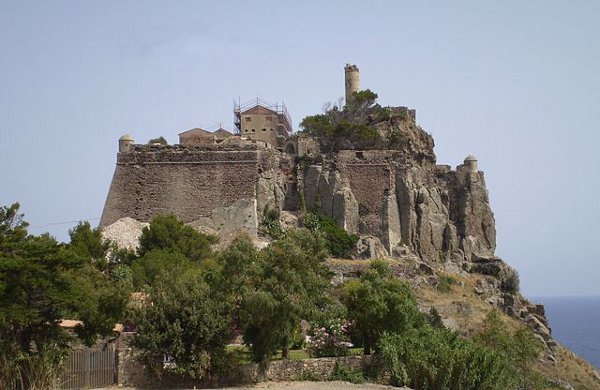
Isola di Capraia

Great interest is the island boat trip and excursion opportunities. The Lagoon is a lake of uncertain origin along the crest of Monte Castello, at an altitude of 321 meters (6 km from the town). Its size is variable depending on the season and in the spring there blooms aquatic vegetation including buttercups.

https://tuscanysea.com/backoffice/immagini/tuscanysea.com/40-17-5-2013-11-13-201.jpg https://tuscanysea.com/backoffice/immagini/tuscanysea.com/40-17-5-2013-11-13-202.jpg

by Valentina
Massa Marittima

Massa Marittima is one of the major tourist destinations of Tuscany and the city it is located in an area of ​​exceptional beauty and interest to the Metalliferous Hills.

Immersed in the Tuscan Maremma, 20 km from the sea, Massa Marittima, cultural center of the "Metalliferous Hills", is located at an altitude of 380 meters. The municipality covers an area of ​​284 km2 and has a population of about 8800 inhabitants, who lives in an area of ​​great natural beauty, with copses, maquis, fields dedicated to agriculture and grazing.

The Etruscans were the first to exploit the mining area and around 750 BC the extraction of minerals brought this people to be the richest in central Italy. The city of Populonia and Vetulonia drove the dominions to the Metalliferous Hills. Populonia drew wealth from the iron ore extracted from the fourth century BC, the island of Elba, from Vetulonia, however, left many of the locals to go and settle in the villages around the present Massa Marittima (so that, in the vicinity of the lake dell'Accesa, were found traces of this presence). In these lands were abundant mineral-rich silver and copper. And the discoveries made are evidence of continuity in the treatment of minerals, which is not much different from that of modern steel mills and foundries, have been found, in fact, remains of furnaces, and increasingly around the lake dell'Accesa, the foundations of a settlement the sixth century BC where they lived probably the leaders of a mine. The Etruscans transformed those minerals rich in gold, iron, silver, lead, copper, jewelry and objects of various use.

The excavations, conducted periodically since 1980, have brought to light, on the high south-east of the lake, many living quarters, which are only visible foundations of the buildings.

These nuclei comprising about ten houses each, usually two or three rooms. The construction technique was typical of Etruscan settlements: foundations of connected stones dry and raised brick raw or made with the technique of the trellis (wood poles, straw and clay); roof with roofing tiles, floor compact clay. In the village were found traces of activities related to the extraction and processing minerals, represented mainly by smelting slag.

The settlement, which has lasted for about a century (end of VII - beginning of the sixth century. BCE until the end of VI), depended on Vetulonia. Its end must be put in connection with the loss of control over mining areas by Vetulonia in favor of other centers, in particular of Populonia.

After the Etruscans, the Romans continued exploitation although to a lesser extent. With the barbarian invasions and the destruction of numerous villages, there was the abandonment of mines until the Middle Ages. The barbarian raids and those of pirates and Saracens down on their knees Populonia, whose diocese was transferred around the eleventh century, Massa.

The activity was resumed by the arrival of the Lombard masters, particularly comacini, labor Tyrolean Saxon and South Tyrol. Not surprisingly, Montieri, dominated by the Bishop of Volterra, in this period saw the increasing importance of own mines and Siena bought a part of the Silver Collection Montieri to mint coins. The extraction of minerals copper, zinc, lead and silver in particular, was therefore a significant boost in the medieval period.

The heyday as a mining center of Massa Marittima occurred between 1200 and 1350, for its heritage, in fact, was called "Mass Metallorum" (the city of metals). In 1225, the city became a free city, redeeming, by virtue of the wealth that came from its mines, the rule of the bishops and more than a hundred years he was able to maintain its independence.

It had its own mint, their weights and measures, and gave Europe the first Mining Code of the story: "Ordinamenta SUPER ART FOSSARUM RAMERIAE ARGENTERIAE CIVITAS Massai" (XIII century), wonderful example of legislation that regulated the exploitation of mining camps, witness the very high degree of development reached by the country both in terms of legal capacity in the management of subsoil resources.

From the middle of the fourteenth century. wars, plagues, subjection to Siena for four centuries put an end to mining in Maremma, the Republic of Siena and later the Medici, when they take the place of power, considered the region as a colony and reduced it to a state of extreme degradation.

Only since about 1830 the area entered a recovery phase, mainly due to the extensive reforms and remediation action undertaken by Lorraine. It was the Grand Duke Leopold II, who released the concessions for the first attempts to study mining in the area: these resulted in failures because the adverse environmental conditions, still plagued by malaria, never allowed to achieve concrete results even after fruitful research. Starting from 1860 a company was finally born, the "Phoenix Massetana'', which exploited profitably in the veins of pyrite in the lake area Accesa.

At the end of the century appeared in the Maremma "Montecatini Company" (which took its name from its first mine, located in Montecatini Val di Cecina, in the province of Pisa), which in a short time acquired the majority of the mines of the district and it increased the production boosting, over the years, to a chemical that used the first product from the processing of pyrite: sulfuric acid.

The rest is recent history: the mines were for decades the backbone of the local economy, which was based almost entirely on the mining and processing activities on the side of the sulphides, and this sector has undergone a period of serious decline, the mines were all closed and Massa Marittima is trying to revive its economy with tourism.

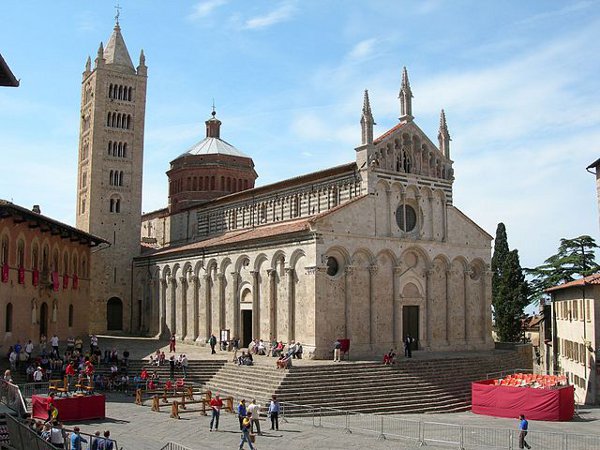
Visiting the city meet the monuments and buildings of extreme particularity, such as the Cathedral of San Cerbone, which was built in 1200 in Romanesque style, today houses a number of important works of art, like a stained glass window made in 1300 representing the Redeemer in Glory and Stories San Cerbone, also a fresco dating back to the fourteenth century and depicting the Madonna and Child Enthroned, frescoes which have as their subject the Crucifixion, the Madonna in Glory with Saints Joseph and Bernard with two monks, attributed to Nasini, San Cerbone with Geese; inside the Cathedral are also a baptismal font, some columns topped by figures of a Griffon, a man with a beard and a horse, a wooden Crucifix by Giovanni Pisano and finally as many as 11 small statues depicting saints and prophets, who along with some frescoes are found in the crypt.

On the square in front of the cathedral are also the Praetorian Palace, built in the thirteenth century, the Palace of the Counts Biserno and the Medieval Palace of the City, one of the main peculiarities of the Tuscan city is to be divided into two parts: the oldest part, surrounded by walls is the Old Town, within which we find the House of San Bernardino and the Palazzina della Zecca, old building where the coins were minted, while, outside the walls meet the Church of San Francesco, in style Gothic, the Church of St. Augustine, the Church of San Rocco, built around 1400, and finally the Renaissance Palace of Arms, which are instead the New Town.

Many museums have been set up in Massa Marittima: the Archaeological Museum, the Mining Museum, the Museum of Art and History of the Mine, the Archaeological Park of Lake dell'Accesa, the Old Mill and Old Joinery.

The origins of the city are to be placed in the Middle Ages, it was built in the territory of Mount Royal and around Mille assumed considerable importance and became a bishopric; Massa Marittima later became the Free City, but it was still conquered and controlled by Pisa, Siena and Florence, under the dominion of which became part of the possessions of the Grand Duchy of Tuscany.

Another element of pride for the city is definitely the award of the Medal of Military Valour, for the courage and the activity of the population in the years of the Second World War.

The city is also famous for its wine DOC, the Monteregio of Massa Marittima, consisting for the most part on the type of Sangiovese and Trebbiano Toscano red for white; famous desserts are also being produced in Massa Marittima, as Panforte, the Seahorses and Ricciarelli.


Quick guide for the search of its solutions for holidays in Cecina.

Those who approach the idea of ​​spending his holidays in Massa Marittima will need to consult a guide to find hotels in Massa Marittima Massa Marittima Hotels or hotels Cecina.


For those in search of the substance and a room can be enough rooms or rooms holiday accommodation Tuscany Coast Tuscany or even rooms for rent Tuscany should be appropriate search terms as well as rooms Massa Marittima.


The Italianists prefer to look for hotels or hotels on the Tuscan coast in Tuscany.


Should nonetheless be acknowledged that Massa Marittima is located on the Etruscan Coast, which is in fact in Tuscany sea, and the Coast Tuscany is unique in the world.


Given that in recent years tourism has largely shown a preference for solutions besides housing type hotel, residences Massa Marittima Massa Marittima holiday apartments, holiday apartments in the Tuscan coastline, have become frequent rumors of research on texts on the Tuscan coast tourism guide .


It is also for this second chapter as previously said about the Etruscan Coast, then in reading pamphlets on Massa Marittima or even where to sleep only to be sought in Tuscany or type the entries residence Massa Marittima Massa Marittima apartments, hotels or even Cecina hotels Massa Marittima.


Then refer to the Help in the Tuscan coast hotels will be well oriented to the voice holidays Tuscan coast and search for hotels in the fen or, if you prefer, hotels Tuscany Coast.


The search for residence on the Tuscan Coast could be profitable since the topic is more general summer holiday in Tuscany, apartments for rent, seaside tuscany, holidays on the sea.


It is not to be neglected even the search for rooms Massa Marittima, in the end we are talking about Tuscany Italy, holiday apartment Tuscany, someone with more economic means seeking Villa Massa Marittima or even Tuscan coast villa rentals Massa Marittima.


For those who opted for a specific area such as the Etruscan Coast Cecina or in a particular way, it will be well to remember that the search terms to be extended in Massa Marittima studios besides vacation rental Tuscany Tuscany or even sea or cottages Massa Marittima.


Finally, not least, we must remember 's Farm or Tuscany Farmhouses Tuscany.


So let's look at farm Massa Marittima.


Then there is the chapter of the holiday apartment very popular among couples and even by couples with a baby. Studios for rent Tuscany is therefore a search term very profitable, as well as studio apartments or houses Tuscany Massa Marittima.

https://tuscanysea.com/backoffice/immagini/tuscanysea.com/25-17-5-2013-11-30-321.jpg

by Valentina
Montenero

The Sanctuary of Montenero


Montenero, placed on a hill overlooking the sea and the port of Livorno, is among the hills of Tuscany's most famous especially due to its famous shrine dedicated to Our Lady of Grace. It is said that a shepherd cripple, around 1345, he found a miraculous image and asked to be transported on the hill of Montenero. Heard the voice of the shepherd did as he was told and got to the top of the hill he found himself cured. Since then, that image of the Madonna has never ceased to be a source of devotion and grace for all those who are turning and the Sanctuary that is born is a place of pilgrimage and visits by a large number of people.


Origins

The origins of the shrine dates back to May 15, 1345, the feast of Pentecost, when, according to tradition, a poor crippled shepherd found the miraculous image of the Virgin Mary and following inner intuition led her on the hill of Montenero, a place already known as a refuge of brigands and considered for this dark, gloomy ... the "mountain of the devil."

Beyond the many legends surrounding the history of the discovery of the image of the Madonna, which critics attributed instead to a certain Jacopo di Michele Gera said, it seems that image appearance in Montenero following a revival of religious fervor, around to 1341. In this year of the inhabitants of Livorno, then little more than a fishing village, would organize a cult of self-sacred images painted recently, however, opposed the ecclesiastical authorities intimated that the cessation of worship, and the disappearance of its images. We can not exclude that in front of this hostility, the image was hidden and later found near the shore of the river Ardenzo'''', from that zealous pastor who took her to the top of the mountain in order to entrust almost certainly the custody of some hermit .

The history

The fame of the miracle spread quickly, because of the many graces made by the Blessed Virgin and the pilgrimages begin with they are on the increase for the small chapel that houses the Madonna. Already in 1380 work began to expand the chapel and premises that served to protect the pilgrims. For the first custodians of the shrine, almost certainly the friars tertiary, followed in the cases of the Jesuits (1442-1668) and Teatini (1668-1792) then indicated as the most qualified to perform the service in the Sanctuary. In fact, in 1720, work began on the Theatines expansion of the Sanctuary which was finished in 1774. During this time, Our Lady of Montenero worked some miracles in favor of the entire city including the one in 1742 when the city was devastated by an earthquake and once again rescued by his patron and his image which was brought to the city and placed in front of the Collegiate. In Livorno that miracle was never forgotten much that is renewed every year the hope that the Livorno made to Our Lady "... to fast in perpetuity January 27, of no dancing, no masks, to assist in the Collegiate same all'annua function ... thanks.'' In 1792 the sanctuary was entrusted to the Benedictine monks of Vallombrosa which are currently the custodians.


Montenero is among the places of Tuscany's most famous especially due to the presence of the Sanctuary. Set on a hill at 300 m asl, Montenero has a wide horizon of the sea and land area of ​​outstanding beauty. Awesome views open before the eyes of observers. From here you can look down to the rock of Meloria, memorable for the betrayal of Count Ugolino (1284) and the famous battle between Genoa and Pisa, but also the plain with its Port of Livorno and that of Pisa. To the south you can see the island of Elba, Corsica and Sardinia: its wonderful sunsets. The name "Montenero" is due to an old famous saying this resort mountain dark, perhaps because covered with jagged ridges and infested with robbers who, in all probability, here waiting for the arrival of ships to which the assault. Montenero joined Livorno with a bus and a funicular that goes up to the square in front of the Sanctuary. The upper square was created by monks in the last century almost atrium discovered the Sanctuary itself. On one side stands the facade of the church, across the street Famedio: chapels that contain the mortal remains of large Livorno such as Guerazzi, Marradi, Meyer, Castles, Farms and a plaque in memory of Pietro Mascagni and Amedeo Modigliani.

L '8th September the festival being felt in the pilgrimage of the locals which is uninterrupted and the shrine is lit up at night after night Marian procession from the Chapel of the Apparition at the Shrine itself.

The Chapel of the Apparition

Located just before the Carriage Square, is the place where the tradition dates back to the discovery of the image of Our Lady of Montenero by a shepherd. Built in 1956, the larger and more beautiful than the pre-existing in the same place where he was the'' Chapel "partially destroyed during the last war (1943).


Church

The Church in Baroque style, very charming and inviting to meditation and prayer. On the main altar stands the Sacred Image of Mary in a marble shrine surrounded by a golden halo. The image of the Virgin, attributed to the school of Pisa and in particular to Jacopo di Michele said Gera, is painted on canvas superimposed at the table. The Virgin with the red robe and blue mantle, is sitting on a pillow and around the head is the word "Ave Maria Mater Christi". The face is tilted toward the child who sits with her hands in her lap clinging to the mother's robe, holding a thread that binds the bird gently on the arm of Mary, as if to indicate that faith is like a thread that draws the salvation Christ which keeps us united devotion of Our Lady.

Other important works of art are the Dome of the Church and the Tele side altars. In the dome, restored in 1992, is represented in the Paradise feast for the highest glorification of Mary, crowned Queen of men and of angels. The painting, executed in 1773, is the work of the famous master Traballesi. In the wonderful scenery saints and angels appear with Old Testament characters: Adam and Eve, David, Daniel, Aaron, Moses, Samson etc. up to St. Joseph, St. John the Baptist, St. Anna S. Cecilia and other martyrs. The most important are the Tele instead of San Giovanni Gualberto, founder of Vallombrosa, in the second altar on the right. The Canvas by an unknown artist depicts the saint in prayer in the background of the heights of Vallombrosa, the feet with the abbey founded by him. Another Canvas, located in the third altar on the right, depicting the Assumption of Mary and is the work of Philip teatino Galletti. In the bottom of the canvas, in the center, there is a niche in which is guarded, well-preserved a crucifix which is assumed to have been originally in a cave in the place Hermit, overgrown cliff on the sea coast near Livorno. On the sides of the Virgin are represented the Apostle St. Peter and the S. teatino Andrew Avellino. Always Galletti is the painting of Our Lady appeared to St. Gaetano Thiene, and presented the Child Jesus was solemnly inaugurated in 1696 on the feast of the Name of Mary.

by Valentina
Meloria

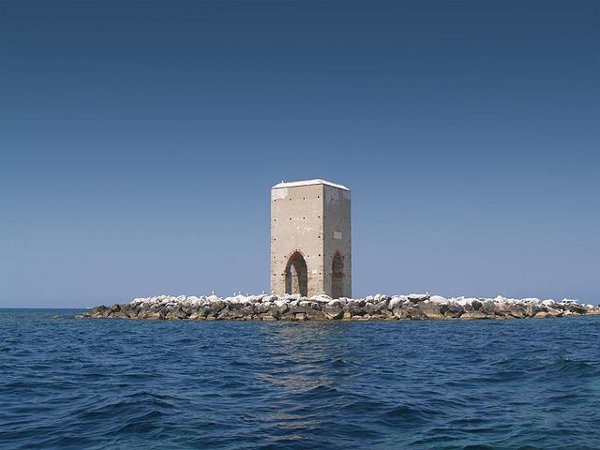
An islet, or more exactly a rocky outcrop surrounded by cliffs above the water in the Upper Tyrrhenian Sea, nine kilometers long and two wide, in front of Livorno which is just a short distance to the sea: this is the Meloria, famous for the battle of August 6, 1284 which marked the great defeat of the Pisan fleet perpetrated by the Genoese. But the Meloria is also a place, from antiquity to the present, for the extraordinary landscape and nature, for morphological details that distinguish it. In this book, a famous explorer of the exotic seas of the Mediterranean and in particular, how Folco Quilici, a historic student of Marco Tangheroni as Olimpia Vaccari, a naturalist and Livorno, such as Gianfranco Barsotti, who Meloria and nature below the its sea knows all, we return to this place that belongs to the collective of the civilizations of the Mediterranean's most important aspects. The book also in the photographs of Fabio Jackdaw, for the emerged part, and William Cicerchia and Federico Fiorillo, for the submerged part, amazing images and highly suggestive.


Cursed meloria

Renzo Castelli

The defeat still burns with Genoa, seven centuries later. Maybe it's time to get over it ... I'm not rooting athlete nor traditions are often a little 'fake driven by tourism, to draw the very soul of a city. In the case of Pisa, his "pisanità." In a few cities, like this one, the story, and then the remote past, have left their mark so marked and conditioning. Pisa has too much memory - the Etruscan origin, the size of its navy - to forget. That's why even today the Meloria is not only the name of a battle ended in defeat, one of many that man has fought on land and sea, but it is the death of a city-state, the humiliation of its citizens. With the Meloria (1284) Pisa has lost her pride, dreams, royalty, and never will forget the lost power. The city-state he bowed his head, perhaps forever, and never forget again. Pisa, which had been (Rudolf Borchardt) "an empire of sails", it remains for ever and ever defeat a city, humiliated, disappointed. Pisa, or wounded pride. It was not just Meloria to dig the large groove that casts its shadow down to us. For the 12,000 dead of the battle that wiped out the soul of the great city-states, were joined by 6 thousand prisoners brought in chains in the prison Genoese module that caused a demographic crisis that seemed irreparable. "This situation - says the historian Emilio Tolaini - led to a sharp increase immigrativo from the country that made it possible to reconstruct in some way the network traffic." But the return to a seminormalità was not true glory: just a century later, in fact, the Florentines buy Pisa and its port.

If it is true that every city has its own soul which is the result of the souls of those who have always lived, many agree that Pisa still a sullenness is the daughter of the most stinging defeat. Grumpy therefore, proud that he judged Borchardt in the last century, and the judgment still stands. For these reasons, nell'effervescente and inventive Tuscany, in the blasphemous, Pisa is placed with different characters from every other tower. The "pisanità", even today, it means mistrust because distrust is the daughter of wounded pride. Not by chance Curzio Malaparte, in designing its Cursed Tuscans, glissò entirely of Pisa. He confessed: "I do not understand them, they Pisa. They have a character evasive, disingenuous. It almost seems like something that should be forgiven. But what? ". The answer would be the same today: to be forgiven to have lost. Yet Malaparte loved Pisa, nightclubs as well as its silences the voices of the students, the extraordinary beauty of the marble and the Arno river that flowed to the sea. Although preferred that river and the ice storms of winter because the "peat" meant the entrance into the EEC Arno. And for a plate of EEC consumed in Piazza Garibaldi, at the inn of the Nile Montanari, Malaparte would have given up the ghost. (Do not know what are the EEC? We can not explain it: come to Pisa and you'll understand). And with the innkeeper friend, Malaparte confided: "You are a strange breed, but cooked well."

Dante saw to his own time and with some effectiveness to denounce the horrible guilt of Pisa. After Meloria, Count Ugolino della Gherardesca held liable for incompetence or betrayal of that defeat, he was locked up to starve to death, with his sons and grandsons in the historic tower in Piazza delle Sette Vie (today, the Knights of St. Stefano). The Dante's invective is strong, but if the poet had known the result would have written things even worse. The bones of Count Ugolino, in fact, were later buried in the face to the river along the river Tramontana and that land remained forever cursed. Who Tread today visit Pisa and its riversides, will find that long line of buildings is interrupted, just before the church of the Holy Sepulchre, by a garden, the only one that can appear on the embankment. But it is not a garden, and there is a cemetery: it is cursed land. Why not forget the people of Pisa. Even today the bones of the count found peace - hopefully - in the convent of St. Francis, on that land will never be allowed to build anything.

No, Pisa can not be considered a city "normal", as well understood Malaparte. Says Professor Silvano Burgalassi, a sociologist and expert on most of the soul of Pisa "Pisa lives of the past and unable to express the values ​​of art, spirituality, intelligence of which also bears. It is a kind of brake, almost a curse, which does not know how to free. Today we could no longer do the Piazza del Duomo or riversides because it would lack the ability of inspiration that were the Pisans before Meloria, when they ruled the seas and saw their mission in this divine something that should be celebrated with dignity. Since then, the soul of Pisa is suffering from wounded pride and is not capable of expressing a depth of thought that is in tune with their times. "

Yet Pisa today would have much to brag about. It has all the requirements to be a happy city: a mild climate, the sea six miles, the hill to seven, the mountain for skiing less than an hour, it has a central position, an international airport, a port (the "port of Pisa", which some call Livorno) at 20 kilometers, has three prestigious universities and one of the largest national nuclei of the CNR, he finally museums and monuments around the world envies us. But it is not a happy city.

How much will have to go because Pisa recover its serenity, forget his defeat and his empire lost, because the "pisanità" finally becomes a positive feeling? No one can say. But it will not be the folklore to heal the wounded pride. The Pisan contemporaries in shadow that simulates a false folklore, once a year, the glory of a maritime republic that no longer exists. Indeed, consider that race a little 'blasphemous, a comparison of muscular athletes who do not have the right to evoke the splendor of an era.

Yet the "pisanità" sick, this grumpy mood, this malaise of the present, often escapes to visitors. If Malaparte was wary of Pisa and Pisa, other visitors instead found a great serenity in the silence of the city, in its pathos.

Elizabeth Barrett wrote: "Pisa, here is a small, charming town of silence. Sleepy streets where grass grows between the stones, where groups of boys frolic in solitude. " Seen by others, Pisa can really look like, tender and silent rather than haughty and sullen. And then, tormented souls, Pisa can be ideal: if his wounded pride is not apparent, it remains untouched by the fragrant golden oasis that reigns in the streets and squares, so that Shelley could find the inspiration for the comporvi ' In elegy death of Keats and Leopardi write in an April night, the scent of wisteria, poetry A Silvia.

by Valentina
Castiglioncello storia arte e vip

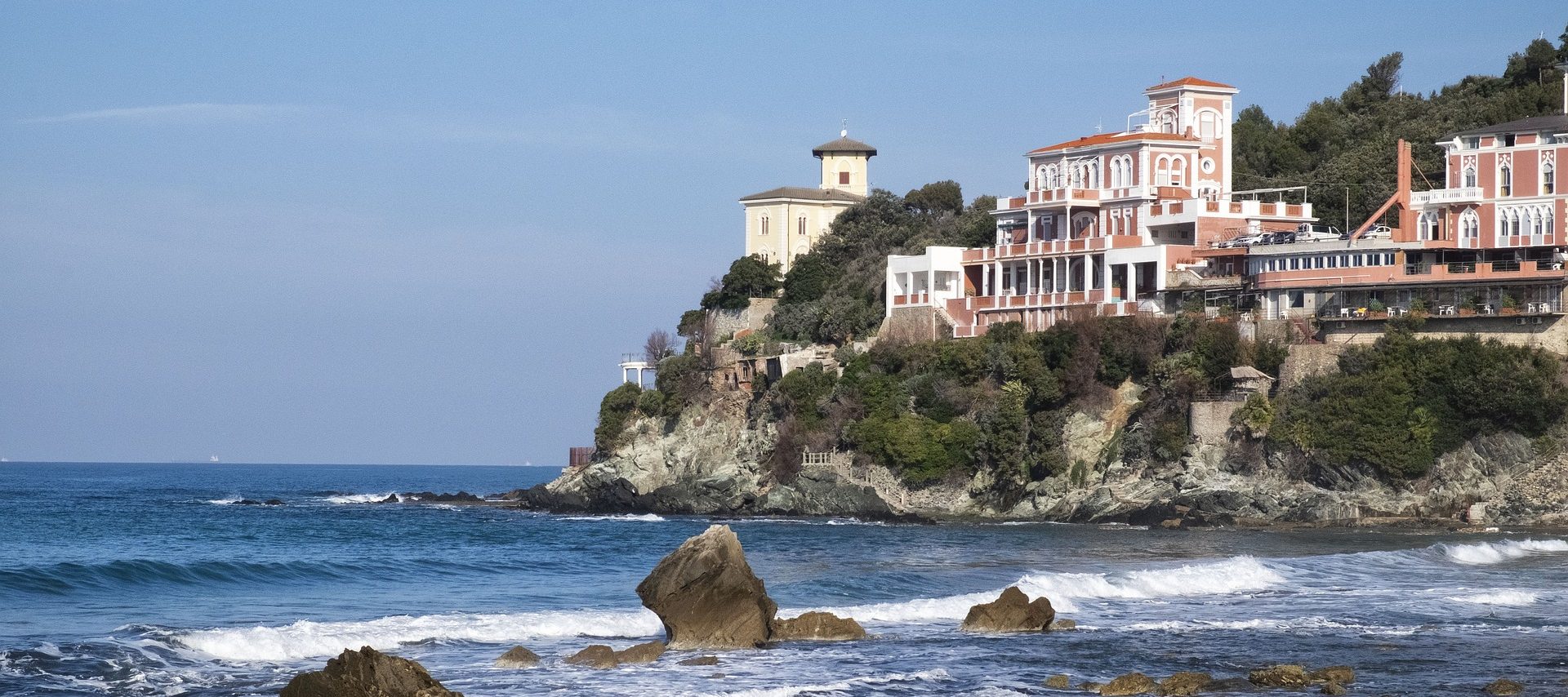
The Etruscan Coast, its hills, its headlands, are the places where you can find Castiglioncello, suspended between the white beaches, cliffs carved by the wind, medieval villages, bays, creeks and hills of the Mediterranean. On the beach you are in the shade of the pines, junipers accompany you from the rocks, the oaks are just a step away from the sea.

Between sea and nature in short, winding path that leads to small architectural treasures, artistic, kept between the folds of this beloved land by the Etruscans who have littered with important evidence.

Castiglioncello is the pearl of the Etruscan Coast, an enchanted rediscovered over the centuries, even after the Etruscans, Romans, by noble Florentines in the Medieval Age, politicians of all the 900, by poets which D'Annunzio is the most known as Great directors, actors, writers and so forth.

The '50s and '60s saw Castiglioncello protagonist of the first order of the phenomena of renewal mundane and customs of our Italian, important films of our cinematic history were here the first stirrings, there is the famous character in those years has not passed for Castiglioncello. I deliberately postponed the presence of Painters Macchiaioli, the Impressionists Italian, that from the second half of 1800 attended continuously witnessed by the works named this promontory in Castiglioncello, coming to give life to the School of Painting in Castiglioncello. Not by chance Castiglioncello lent itself to provide the basis of observation of those Mediterranean colors-Tuscan Italian Impressionism was trying to customize taking the cue from the bottom of the main European schools.


A part of the deal which Painters Macchiaioli Edward Borrani, Giovanni Costa, Giovanni Fattori, Signorini, Giuseppe Abbati, Vincenzo Cabianca, Peter Sense, Ugo Manaresi, Adolfo Tommasi, Vittorio Corcos, Alfredo Muller, John Bartolena, because their work is of such vital for Italian painting, requiring a large chapter.

Castiglioncello is still more than before and also art, entertainment, culture, Castiglioncello Festival lasts almost all year round and is in charge of maintaining ARMUNIA always on this hotbed of theater, music, debate on the big issues of Philosophy, Semiotics, Infants Education, Literature, Sculpture. The Etruscan Coast, Castiglioncello, a place, a place where life can still afford to move more slowly than elsewhere. The medieval villages, set against the rolling hills and rich in a thousand-year history, they have cobbled streets, churches, libraries, towered palaces, churches and castles, which are reviving a past time that seems so close here. At their feet the sea which is the heart of the Etruscan Coast and that is your constant companion. He lives in the history of this area, in its landscapes, sunsets colors and perfumes the air.


It 'a sea alive and vital, populated by wildlife pregiata.Le beaches come in the pine forests and groves of lime trees and tamarisk, whose aromas perfume the air and mingle with the smell of salt.

And the Mediterranean, with the afternoon after that go to the beach is nearly touching the crystal clear sea.

All the beauty is at a stone's throw away, the oasis of Bolgheri and Magona, and the hills of Livorno, protected areas, wildlife refuges populated by rare and precious species, a campaign full of colors and scents: Coast of the Etruscans nature, salvagurdata and protected, not only setting, but the essence of this land.


Olive groves, holm oaks and cork oaks, chestnut trees, are crossed by paths that lead to embroidery villages,

ancient monuments, but also to the city of Pisa, Volterra, San Gimignano, Siena, Arezzo, Florence, and then to hamlets such as Bolgheri, Bibbona, Donoratico, Massa Marittima, Calci.

In the fertile countryside, which stretches from the sea to the hill slopes, unravels the wine road, illuminated by the sun filtering through the trees and shines the vineyards, a journey of the senses and the soul.

E 'in Bolgheri which was founded in 1970, Sassicaia, not just a wine but one of the legends of the world.

In just twenty years in this area there has been a boom in the production of wine of excellent quality.

That area was marginal throughout the long range of hills between Castiglioncello Piombino, has become the place of the apotheosis of Italian wine, taking in tow all the other products of this land, honey, extra virgin olive oil.


And in this land of the Maremma, where there are three names for the Wine of Origin (Montescudaio - Bolgheri - Val Di Cornia), gastronomy is an ancient art that finds nourishment in the quality of local products and in the imagination of cooks, giving rise to real places of worship for gourmets from all over the world to rediscover the flavors and tastes forgotten

https://tuscanysea.com/backoffice/immagini/tuscanysea.com/17-17-5-2013-10-44-431.jpg https://tuscanysea.com/backoffice/immagini/tuscanysea.com/17-17-5-2013-10-44-432.jpg

by Valentina
Arezzo

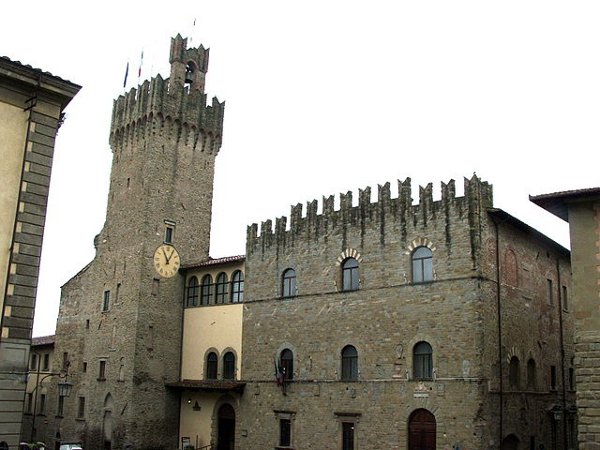
Important tourist center famous for the "Giostra del Saracino" (jousting tournament that is held on the first Sunday of September each year) and for a major antiques fair (the first Sunday of each month). The Gothic cathedral, the monumental Piazza Grande, with the majestic Palace of the lodges by Giorgio Vasari, the Vasari same house beautifully frescoed, the birthplace of Francesco Petrarca, Palazzo dei Priori, the church of S. Maria delle Grazie and San Domenico (sec XIII - XIV), which preserves a valuable altar crucifix by Cimabue are just some of the works that give luster to this town with the famous church of San Francesco in which we find an impressive and prestigious cycle of frescoes of the "Legend of the True Cross" by Piero della Francesca: one of the greatest achievements of all the 400 and the scenic Pieve S. Maria, one of the most important Romanesque buildings in the region. Among the many fine museums include the "Medieval and Modern" and the Archaeological Museum with prehistoric, Roman and Etruscan mainly located at the remains of the Roman amphitheater.


Arezzo, m. 296 on a mild slope of the northern edge of the Val di Chiana where this is grafted with Casentino, Valdarno, with the wide grooves of the Arno, one to the east, the other west, the Apennine ridge Pratomagno (1592 m).

The city's population is 108,000, which .. The inner city expands, wrapping a hillside on which it stands, with a plant almost semicircular, whose center is occupied by the Cathedral, which is situated in a dominant position, 286 meters. From the Piazza del Duomo depart radially the three main streets of the city on their way to the Val di Chiana, the Valdarno di Sopra, in the Casentino. Via Garibaldi size, the three major main roads, following the axis of the semi-circle. Outside of it, towards the railway line, there are less ancient neighborhoods, with streets, straight, wide, tree-lined, which refer to the large square in the center of which stands the monument to Guido Monaco erected in 1981 to mark the centenary of the great Arezzo.

A characteristic feature, keep the streets of the medieval Old Town and the cobbled streets lined with buildings in the sixteenth century. Noteworthy is the Cathedral, whose facade is modern renovation, in harmony with the interior architecture, with three naves of Roman-Gothic style, beautiful and hexagonal, also modern and rich in the works of painting and writing. Notable Santa Maria della Pieve with its portals, the work of the thirteenth century, with a high tower campacaria. Fine the churches of S. Francesco (XIII century restored between 1900 and 1920) with the frescoes of Piero della Francesca and St. Dominic (XIII; later restored), built on the design of the Annunciation Nicola Pisano (1491-1517) by Antonio Sangallo, and the Santa Maria delle Grazie (XV) attributed to Benedetto da Majano with its elegant portico, which is reminiscent of the Servants, in Bologna, as well as the Loggia del Vasari.

Arezzo is a city in Tuscany capital of the province, in m. 296 on a mild slope of the northern edge of the Val di Chiana where this is grafted with Casentino, Valdarno, with the wide grooves of the Arno, one to the east, the other west, the Apennine ridge Pratomagno (1592 m).

The city's population is 108,000, which .. The inner city expands, wrapping a hillside on which it stands, with a plant almost semicircular, whose center is occupied by the Cathedral, which is situated in a dominant position, 286 meters. From the Piazza del Duomo depart radially the three main streets of the city on their way to the Val di Chiana, the Valdarno di Sopra, in the Casentino. Via Garibaldi size, the three major main roads, following the axis of the semi-circle. Outside of it, towards the railway line, there are less ancient neighborhoods, with streets, straight, wide, tree-lined, which refer to the large square in the center of which stands the monument to Guido Monaco erected in 1981 to mark the centenary of the great Arezzo.

A characteristic feature, retain the streets of the medieval Old Town and the cobbled streets lined with buildings in the sixteenth century. Noteworthy is the Cathedral, whose facade is modern renovation, in harmony with the interior architecture, with three naves of Roman-Gothic style, beautiful and hexagonal, also modern and rich in the works of painting and writing. Notable Santa Maria della Pieve with its portals, the work of the thirteenth century, with a high tower campacaria. Fine the churches of S. Francesco (XIII century restored between 1900 and 1920) with the frescoes of Piero della Francesca and St. Dominic (XIII; later restored), built on the design of the Annunciation Nicola Pisano (1491-1517) by Antonio Sangallo, and the Santa Maria delle Grazie (XV) attributed to Benedetto da Majano with its elegant portico, which is reminiscent of the Servants, in Bologna, as well as the Loggia del Vasari.


Archaeological Etruscan document the existence of Arezzo (Arretium) since the sixth century. BC The city continued to flourish during the Roman period, when it was organized as a town hall with a vast territory.

In the first imperial period its sealed ceramic red coral with relief decoration (ceramic Arezzo) became famous and was exported and then imitated throughout the territory of the Empire. It was famous as much as they are now its industries goldsmith who, along with businesses of various types of Arezzo are one of the richest cities in Italy. The classical period the Archaeological Museum provides rich testimony: his most famous piece is probably the crater of Euphronios 500 BC

Rich and intense was the life of the city in the Middle Ages. We remember only one episode: the clash with Florence Campaldino in 1289 that reminds us of famous verses of Dante Alighieri. Traces the exile Florentine poet is full of rest and the nearby beautiful Casentino valley, one of four in the Arezzo area with Valdarno, Val di Chiana and the Tiber Valley. In 1384 Arezzo was practically "sold" in Florence and from then on his story was that of the Florentine Republic before the Signoria and the Grand Duchy of Tuscany then. Physicians naturally left their mark in the sixteenth-century fortress in the north of the city. In the historical center, who walks along the Corso or the narrow medieval streets that lead up to the highest part where the Gothic cathedral dedicated to San Donato, often has the impression of being inside one of the frescoes of Piero della Francesca's Legend of the True Cross, in St. Francis. In the background of the discovery of the three Crosses, Jerusalem has the traits real dell'Arezzo fifteenth. The Romanesque period the capolacvoro is the church of Santa Maria dei sec. XII and XIII, of great beauty, which contains, amongst other works of art a polyptych by Pietro Lorenzetti. In the Church of San Domenico then there is another exceptional piece, a Crucifix by Cimabue.

In this town was the birthplace of Francesco Petrarch and, a few centuries later, Giorgio Vasari, famous for his Lives, still indispensable text for the biography of the artists until the sixteenth century.

In Arezzo still runs every year the Giostra del Saracino, a traditional festival in costume. With the spear skilled knights on horseback attack the wooden figure of the "tumbler" which in turn can affect horse and rider with a weapon he holds in his right hand if that, once hit, does not go away quickly.

Arezzo: The birth of the free Commune

It is the rebirth after the Mille to trigger a new ferment economic, demographic and housing. Hinge and emblem of the recovery is the birth of the free Commune, which rapidly extends its dominance in the countryside, eroding the noble powers of the ecclesiastical authorities. The presence of a console is attested in Arezzo since 1098.

Around 1200 urban development leads to the construction of a new circle of walls, which on the NE side reconnects to the Etruscan-Roman times, while on the slopes S 0 and embraces a semi-circle the base of the hill with a clipping path still visible in the street Garibaldi (15 Kb). I1 perimeter of the city reaches 2,600 m. and encloses an area of ​​approx. 51 hectares, the main radial village becomes the master. In the course of the thirteenth century are situated at the top of the hill numerous public buildings and casetorre (36 Kb) is completed the construction of the first great basilica of the town hall, the church of S. Maria, a splendid example of Romanesque architecture (14 Kb). At the end of the century, under the influence of the new gothic style which is emerging: the construction of the Cathedral, an event that follows the forced return of the bishopric within the walls (1203), and the churches of two major monastic orders preachers : S. Francis and St. Domenico.

The city life is regulated by the city, governed mainly by the Ghibellines, which extends its control over a vast territory (from Borgo San Sepolcro to Massa Trabaria, mid Valdambra the Valdarno, Casentino from the Chiana Valley) being protagonist of the bloody seizure of Cortona (1258) (11 Kb) and clashing with varying degrees of success with large nearby towns (Siena, Florence, Perugia, Città di Castello).

The defeat suffered by the Ghibellines in Campaldino (1289), where he died the same Guglielmino Ubertini bishop of Arezzo, Florence and Siena puts in possession of large portions of the territory of Arezzo.

The cultural revival includes the opening of the Studium - whose legal systems governing in 1255 one of the oldest medieval universities - the flowering of liberal arts and the business of poets (Guittone, 1235 ca. - 1294) and artists (Margarito d ' Arezzo, 1236 ca. - 1293 approx.), followed by Florentine masters (Cimabue, Crucifix in S. Domenico) and Siena (Pietro Lorenzetti, polyptych of the Parish). In 1304 Arezzo gives birth to Francesco Petrarca, the son of a Florentine escaped.


Arezzo: The Lordship of Tarlati

The Rise of Guido Tarlati (bishop in 1312, in 1321 lord for life), home of the powerful Ghibelline Pietramala (his coat of arms is kept at the Coat of Arms of the State (28 Kb), while his cenotaph is located in Cathedral (25 Kb), lifts the city from the defeat of Campaldino and starts in the first decades of the fourteenth century a new, intense period of development.

In the wake of re-conquests and territorial expansion will proceed to a further widening of the walls towards the plains of the south; work is completed, the civic walls enclose an area of ​​107 hectares.

A Guido Tarlati happens in the lordship his brother Pier Saccone (1327), with whom he began a rapid process of decay, in 1337 the city was sold for the first time in Florence, which brought to power the Guelph party.

Recovered their independence and failed several attempts to establish a government mansion, we arrive between 1376 and 1384 to a prolonged political crisis, during which the city is repeatedly sacked. In the same 1384, was sold again in Florence from Enguerrand de Coucy leader for 40 thousand gold florins and definitively tied to the fate of the dominant, Arezzo lost, along with independence, much of its cultural and artistic autonomy.

Spinello Aretino (1346 ca. 1410) is the latest local artist to work in the city in the second half of the fourteenth century, in the course of the next century the cultural environment Arezzo is dominated by the personality of training in Florence, which leave a clear imprint even in ' architecture town, in the transition from the Gothic to the Renaissance.

In the fifteenth century operate in Arezzo Bernardo Rossellini (Palace of the Fraternity), Benedetto da Majano (portico of S. Maria delle Grazie), Giuliano da Majano (cloister of the Badia), Parri di Spinello, Bartolomeo della Gatta (a project of the Church of the Annunciation ).

But the event of greatest flow rate is the assignment of Piero della Francesca frescoes in the choir of the church of S. Francis, from office, awarded in 1453, was born the famous cycle of the Legend of the True Cross, which was to come into the category of masterpieces of Italian art and universal. They come from Arezzo, however, men like the humanist Leonardo Bruni (35 Kb) (1374 approx. -1444), Author of the Historia Florentina, writers Benedict (13 Kb) (1415 -1466), Francesco (1416-1488) and Bernardo ( 1458 1535) Welcomed the corrosive writer Pietro Aretino (1492-1556).


Small tips for finding their own solutions for holidays in Tuscany.


Those who approach the idea of ​​spending his holidays on the Tuscan coast will need to consult a guide coast hotels Tuscany to find hotels on the Tuscan coast or hotel on the Tuscan Riviera.


The Italianists prefer to look for hotels or hotels on the Tuscan coast in Tuscany.


It should however be considered that the Etruscan Coast is in fact in Maremma

(Remember that reaches up to the Maremma Livorno), then refer to the guide in the Tuscan coast hotels will be well oriented to the voice holidays in Maremma and search for hotels in the fen or, if you prefer, hotels in the fen.


Given that in recent years tourism has largely shown a preference for solutions besides housing type hotel, residences in Tuscany, holiday apartment in Tuscany, holiday apartments on the Costa Tuscan vacation homes for rent have become frequent items search of help texts Tuscan tourism or tourism guide the Tuscan coast.


The search for residence on the Tuscan Coast could be profitable since the topic is more general in apartments for rent, holiday Tuscan sea, sailing holiday, summer holidays Tuscany.


It is not to be neglected even the search for rooms Tuscany, basically we are talking about Tuscany Italy, holiday apartment Tuscany, someone with more economic means looking Tuscan villa or villa rentals Tuscany Tuscan coast.


For those who opted for a specific area such as the Etruscan coast or to Castiglioncello in a particular way, it will be well to remember that the search terms to be extended to Castiglioncello holiday besides vacation rental Tuscany Tuscany beach or camping or even Tuscany.


Then there is the chapter of the holiday apartment very popular among couples and even by couples with a baby. Studios for rent Tuscany is therefore a search term very profitable, as well as studios or studio accommodation Tuscany Coast Tuscany.


For those in search of the substance and a room can be enough rooms or rooms holiday accommodation Tuscany Coast Tuscany or even rooms for rent Tuscany should be appropriate search terms as well as rooms Tuscany.


Last but not least, we must remember 's Farm or Farm Holidays Tuscany Tuscany.


It is also for this second chapter as previously said about the Maremma, then checking the Tuscan coast hotels guide or even sleep in Tuscany where the need to search for or type the entries residence in Maremma, Maremma apartments, hotels or hotels in Maremma in the fen.

https://tuscanysea.com/backoffice/immagini/tuscanysea.com/9-17-5-2013-10-17-421.jpg https://tuscanysea.com/backoffice/immagini/tuscanysea.com/9-17-5-2013-10-17-422.jpg

by Valentina
Baratti e Populonia

About 10 Km from Piombino, on the avenue leading to St. Vincent, it crosses the road in a few minutes leads to Baratti. Beautiful natural harbor, a synthesis between the beauty of its sea and its sunsets, and impressive archaeological remains of the ancient Etruscan necropolis. Tombs of various types, scattered throughout the territory invite you to a journey back through the ages in a mysterious and fascinating world

The road continues to climb then winding in the green of the Mediterranean, to the ancient Etruscan town of Populonia, which was also the largest center of the Mediterranean specializing in the smelting of iron obtained from the ores extracted from the nearby island of Elba. Located on top of a hill surrounded by the sea, retains its medieval walls built for defense against the Barbary pirates and the defense complex of the fortress built in the first half of the fifteenth century by Jacopo II Appiani. Within the walls lies a quaint little village fourteenth century, organized on the two longitudinal streets of San Giovanni di Sopra and San Giovanni di Sotto, where in a small but valuable private museum are preserved Etruscan and Roman artefacts found in excavations of the area and into the sea. From medieval fortress, which can be visited, opens an exceptional panorama of the valley below and the Tuscan archipelago. The Archaeological Park of Baratti and Populonia allows the full tour of the archaeological sites of the area.


Some tips for finding ideas for holidays in Tuscany.

Who approaches the idea of ​​spending his holidays on the Tuscan coast will need to consult a guide coast hotels Tuscany to find hotels on the Tuscan coast or hotel on the Tuscan Riviera.


The lovers dell'italianismo prefer to look for hotels or hotels on the Tuscan coast in Tuscany.


Consider, however, that the Etruscan Coast is located in Maremma

(Remember that reaches up to the Maremma Livorno), then read the guide in the Tuscan coast hotels will be good to go and try voice holidays in Maremma hotels in the fen or even hotels in the fen.


Since by now tourism has consistently proven to head towards solutions besides a residential hotel, residences in Tuscany, apartment in Tuscany, holiday apartments on the Costa Tuscan vacation homes for rent have become frequent topics of research publications on tourism guide Tuscan or tourism guide the Tuscan coast.


Here again we return to what was previously said about the Maremma, then refer to the guide in hotels or even the Tuscan coast in Tuscany goes to sleep formulated or typed entries residence in Maremma, Maremma apartments, hotels or even in Maremma hotels in Maremma.


Do not forget even the search for rooms Tuscany, in fact we are talking about Tuscany Italy, holiday apartment Tuscany, someone seeking more wealthy Tuscan villa or villa rentals Tuscany Tuscan coast.


For those who leant for a specific area such as the Etruscan coast or to Castiglioncello in particular, will be worth remembering that the research should be extended to Castiglioncello holiday besides vacation rental Tuscany Tuscany beach or camping or even Tuscany.


Then there is the area of ​​apartment rentals in great demand by couples or by couples with a newborn. Studios for rent Tuscany is therefore a very effective search term, like studios or studio accommodation Tuscany Coast Tuscany.


For those in search of the economy and a room can cater rooms or rooms holiday accommodation Tuscany Coast Tuscany or even rooms for rent Tuscany should be appropriate words as well as rooms Tuscany.

The consultation of residence on the Tuscan Coast could be useful since the topic is frequently centered on apartments for rent, holiday Tuscan sea, sailing holiday, summer holidays Tuscany.

by Valentina